Phra Nakhon is the Bangkok that existed long before the skyscrapers — a district where ancient temples, century-old shopfronts, and slow-moving canals reveal the city’s enduring spirit. This is where the memory of old Bangkok lingers in bridges, fortresses, family recipes, and the gentle rhythm of its waterways. To walk these streets is to witness the city’s heritage living quietly in everyday life.
If the relentless rhythm of modern Bangkok – its glass-clad towers and sprawling malls – begins to dull your senses, take a slow detour into the heart of its heritage. Set aside a half day, dress comfortably, and venture into Phra Nakhon, the district where Bangkok’s soul still lingers in its kitchens, temples, and meandering alleyways. Once the name locals used for the capital itself, Phra Nakhon remains a living archive of the city’s many layered past – a place where stories are etched into timeworn walls and rise gently from simmering street pots.
As both a historian and cultural guide, I extend this invitation not merely as a suggestion, but as a quiet challenge: to abandon the familiar thoroughfares of modernity and embark upon a route that reveals the city anew from the vantage point of its waterways.
From Busy City to Old City
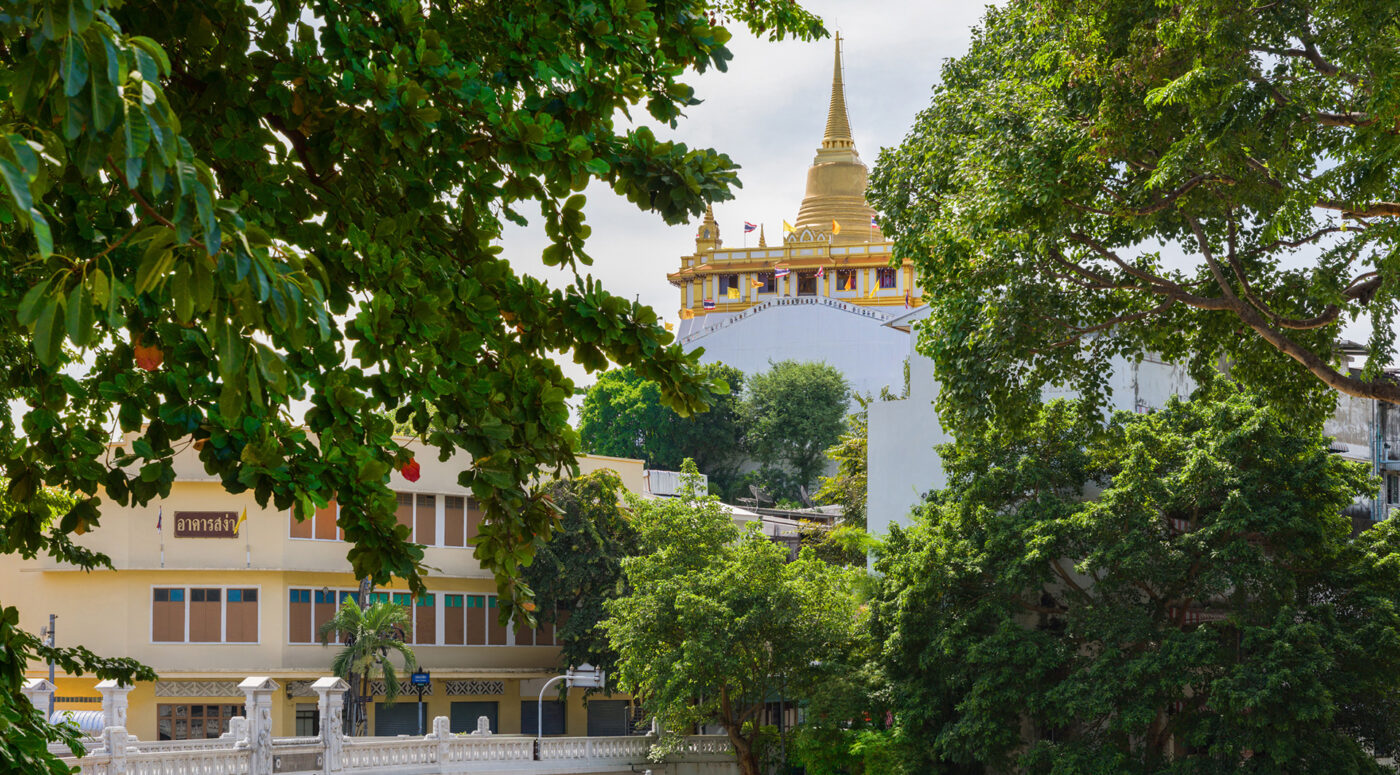
Board a public water taxi at Hua Chang Pier, just steps from Siam BTS Station, and cruise along the Saen Saep Canal. In a mere 15 minutes, the urban congestion dissolves behind you. As the boat glides under rusted railway bridges, temples long obscured by concrete will emerge into view. When the golden spire of Phu Khao Thong, or the Golden Mount, glimmers faintly on the horizon, prepare to disembark at Phan Fa Lilat Pier — your gateway into Bangkok’s past.
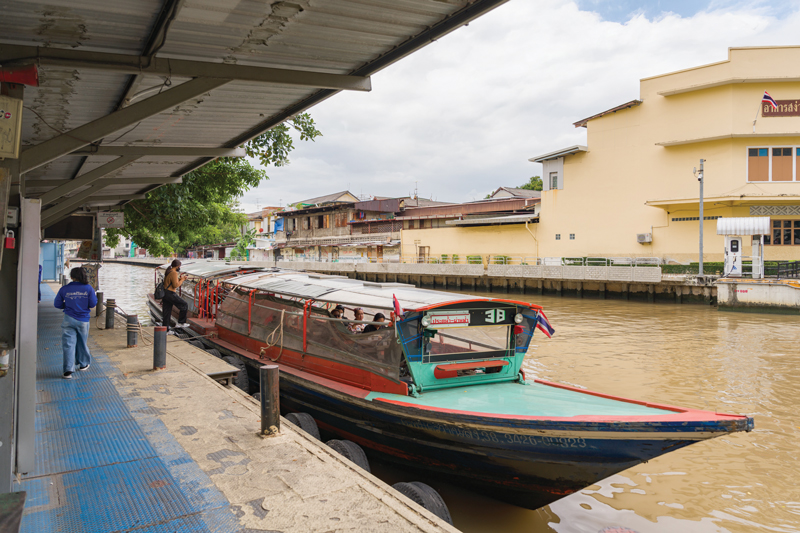

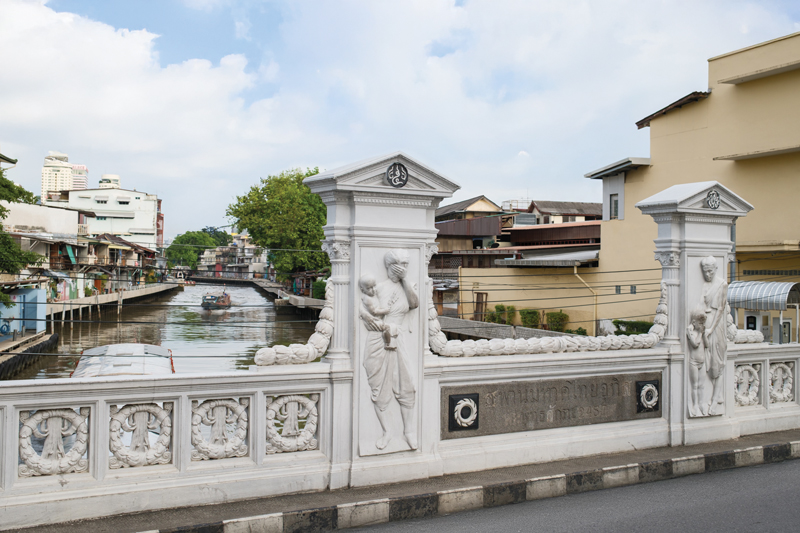
Phan Fa Lilat Pier is more than a transport node — it is a historical threshold. Two centuries ago, this convergence of roads stood at the city’s eastern perimeter, fortified by Mahakan Fort against threats real and imagined. Though the fort remains, today we cross a more poetic structure: Mahat Thai Uthit Bridge, better known as the Crying Bridge, which was built over 110 years ago. Its name derives from the delicate bas-reliefs portraying mourners, hands pressed to faces, commemorating the death of King Rama V in 1910 — a testament to national grief rendered in stucco.
Scale the Golden Mount
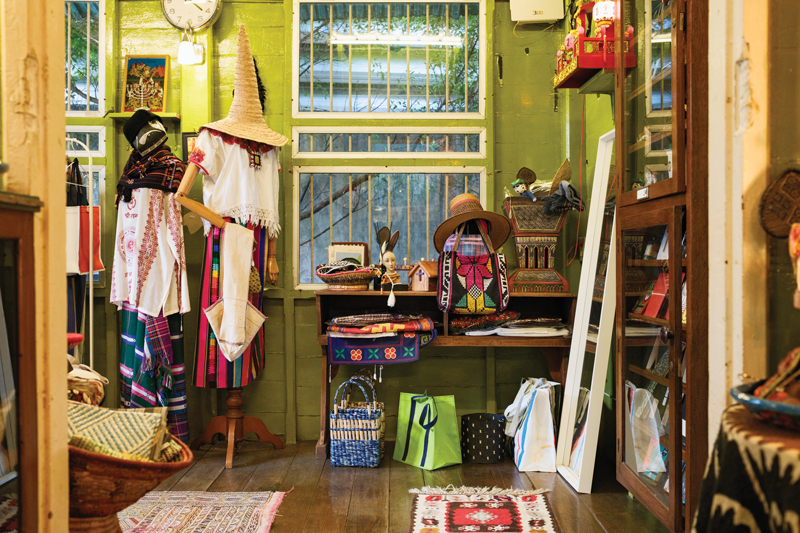
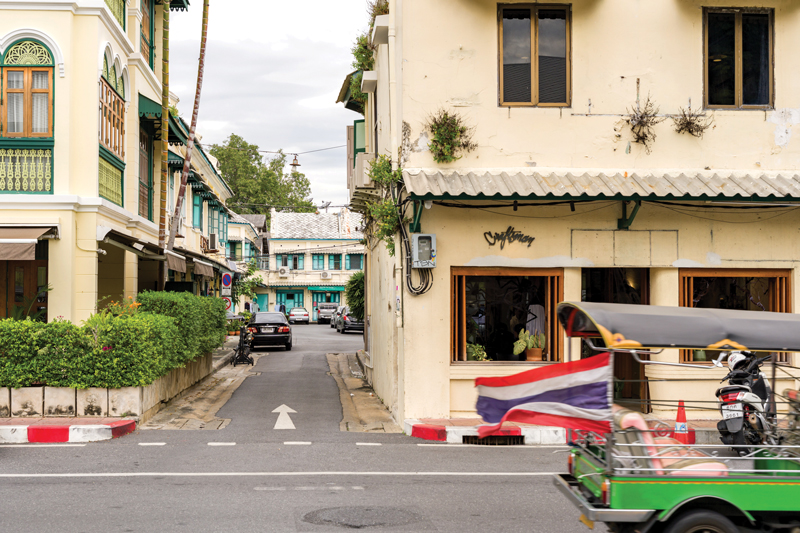
Just beyond lies Paribatra Road, once the bustling epicenter of Bangkok’s timber trade. Though many merchants have migrated to modern premises in Bang Pho located about 10 kilometers away, a few traditional shophouses are still standing, but many stores that used to sell processed wood in planks or logs have now turned to selling wooden door panels instead. Some have reinvented themselves as boutique cafes or artisanal souvenir shops, selling hand-carved elephants and bespoke nameplates — souvenirs redolent of a slower time.
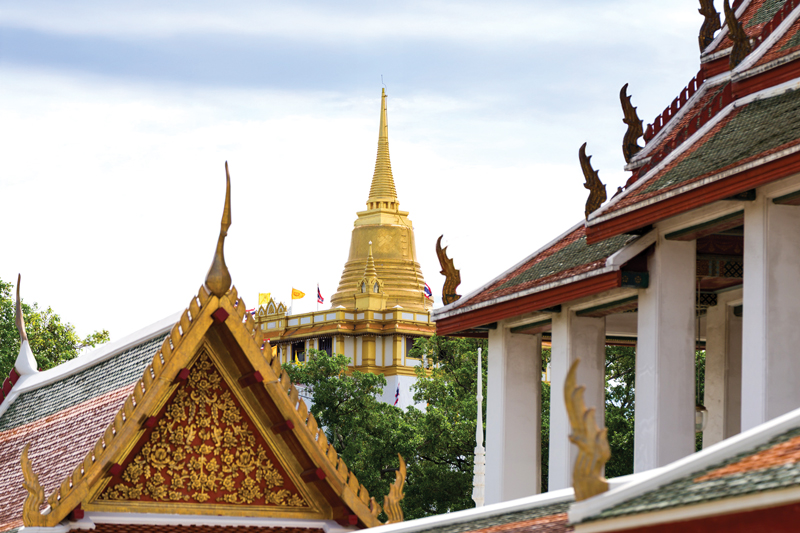
Should your energy permit, ascend the 300-plus steps of the Golden Mount. This man-made hill was originally intended to be built in the form of a large prang-style tower outside the old city walls. Though the early construction faltered and was abandoned for years, it was later reborn as the gilded bell-shaped stupa of Wat Saket, making it a striking departure from the original intention. From its summit, the city unfolds below in panoramic splendor — a rewarding vista that recalls the Bangkok of centuries past.
Beneath the serene golden dome lies a darker chapter of history. Encircled by canals, Wat Saket was once the final resting place for the unclaimed dead, particularly during the cholera outbreaks of the early 19th century. Bodies were brought to its cemetery grounds for their last rites. Near the foot of the mount, a haunting sculpture stands in quiet remembrance, ensuring this collective memory endures rather than being washed away by time.
The Macabre and The Mouthwatering
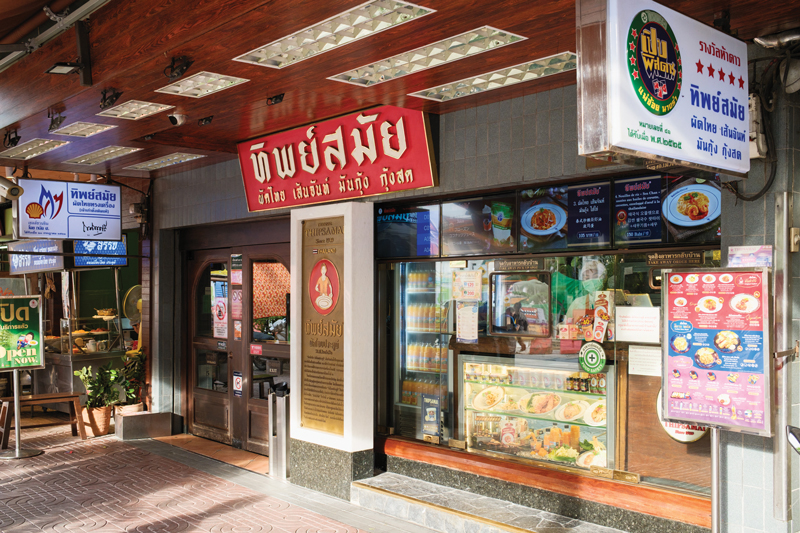
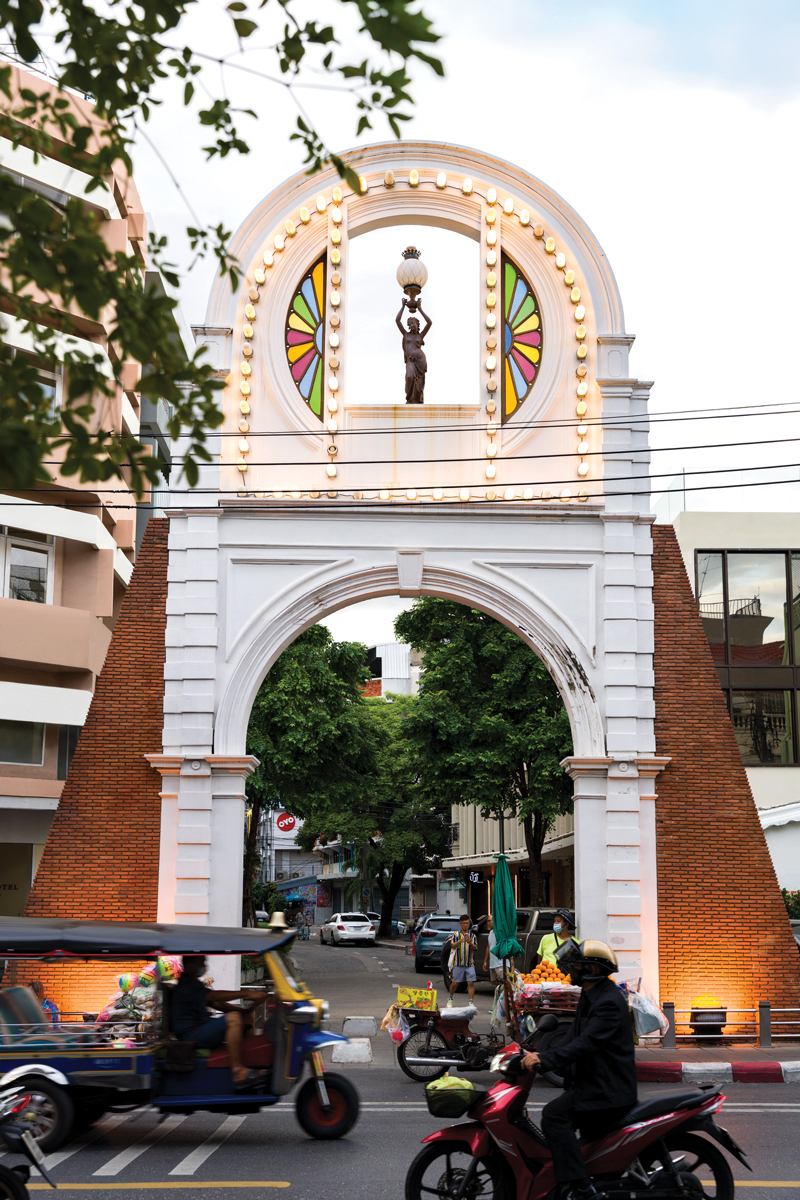
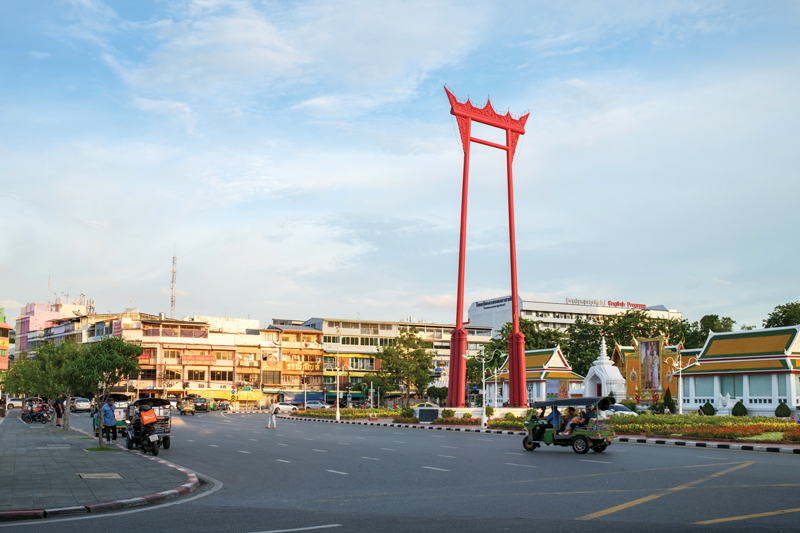
Returning to Paribatra Road, cross a canal and arrive at Samran Rat Intersection — once known by its more macabre moniker Pratu Phi, or “Ghost Gate.” In centuries past, this was the route by which the deceased were carried beyond the city’s sacred boundaries for final rites. Today, the air is filled not with somber echoes but with lively aromas of culinary treasures. Just a few steps away stands Thipsamai, the venerable Pad Thai institution that has delighted diners since World War II.