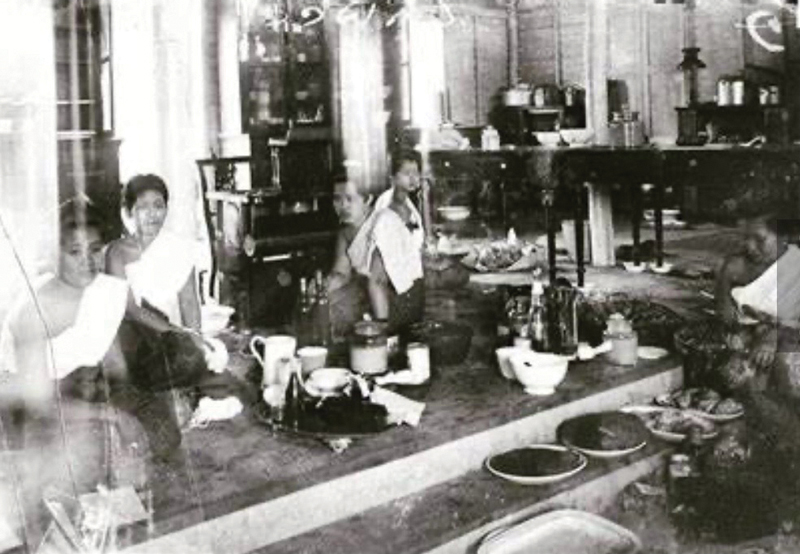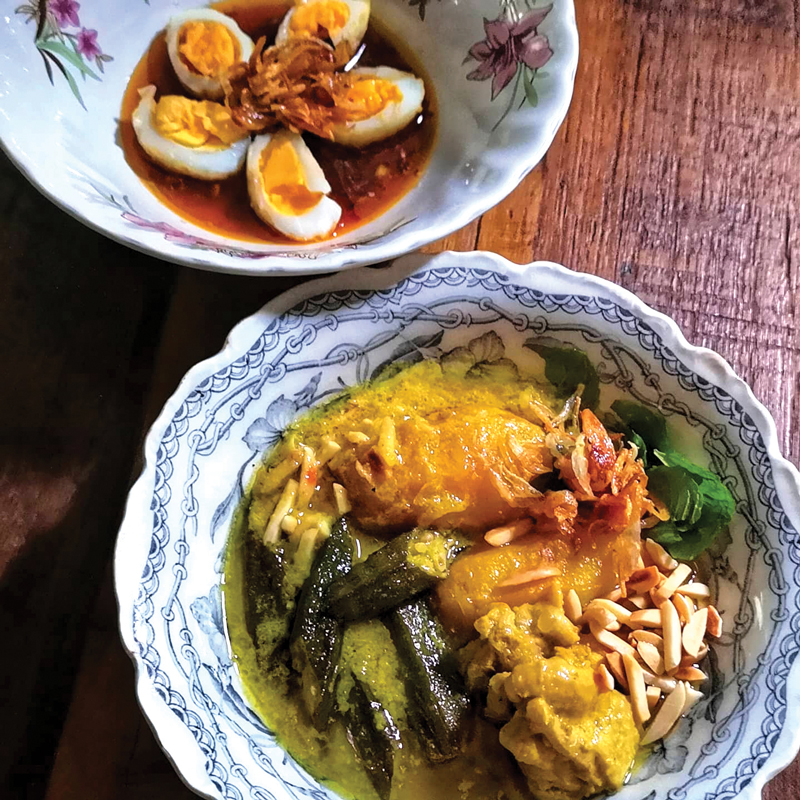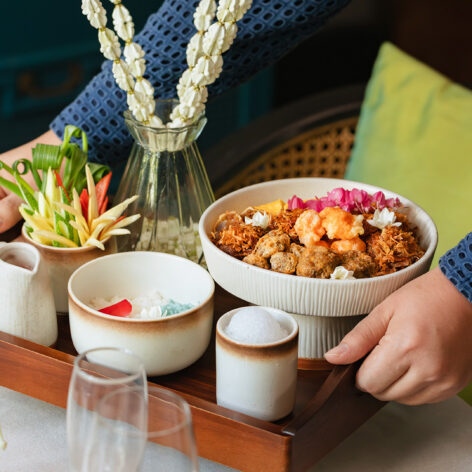
The Bunnag family has long been a pillar of Thai history, yet the contributions of women remain largely in the shadows. Beyond the political achievements of the men, the family’s aristocratic women cultivated a profound culinary mastery that defined generations. Though absent from formal chronicles, their influence on Thai heritage is profound—none more so than one remarkable cook whose story is finally being told.
The Name That Haunted Me
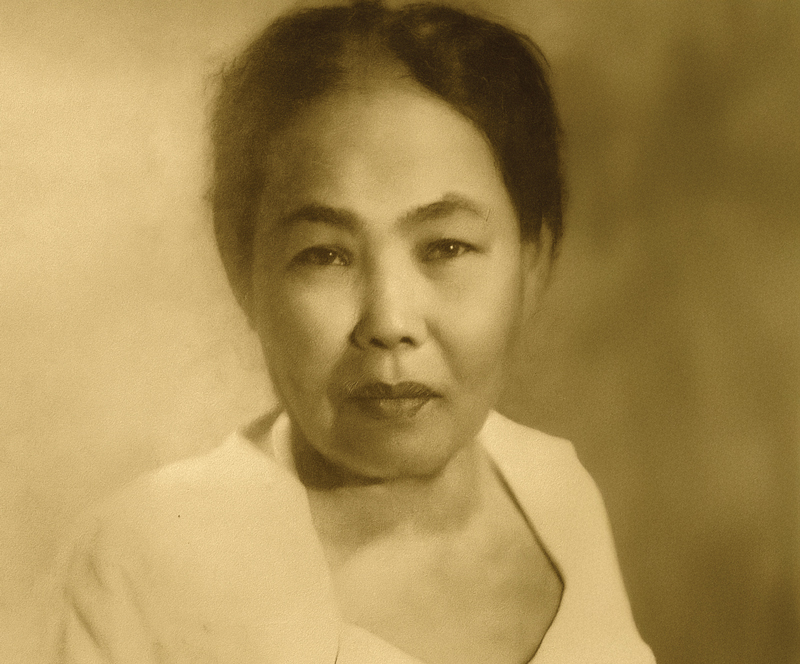
I must have been around fifteen years old when I first heard about her. I had asked my mother why my older sister Nid could cook Thai food so well. I noticed that my sister’s food had a polished quality, almost overtly refined for someone so young. The year was 1975 and we were living in Washington, D.C. My mother said, “Oh, Nid was always interested in cooking at a really young age, so when she was around fourteen we sent her to classes with Khun Ya Jeeb.” My mother, who was not really into cooking, paused, a thoughtful look came over her; then continued, “Khun Ya Jeeb – she was an amazing cook, everything she made was special, very intricate … but …she was having financial difficulties. We sent Nid, partly to help her, and also for Nid to learn.” (Khun Ya is Thai for grandmother. Thais will use this term for a respected elder who may or may not be related.) This lady turned out to be Jeeb Bunnag whom my mother deemed a culinary genius.
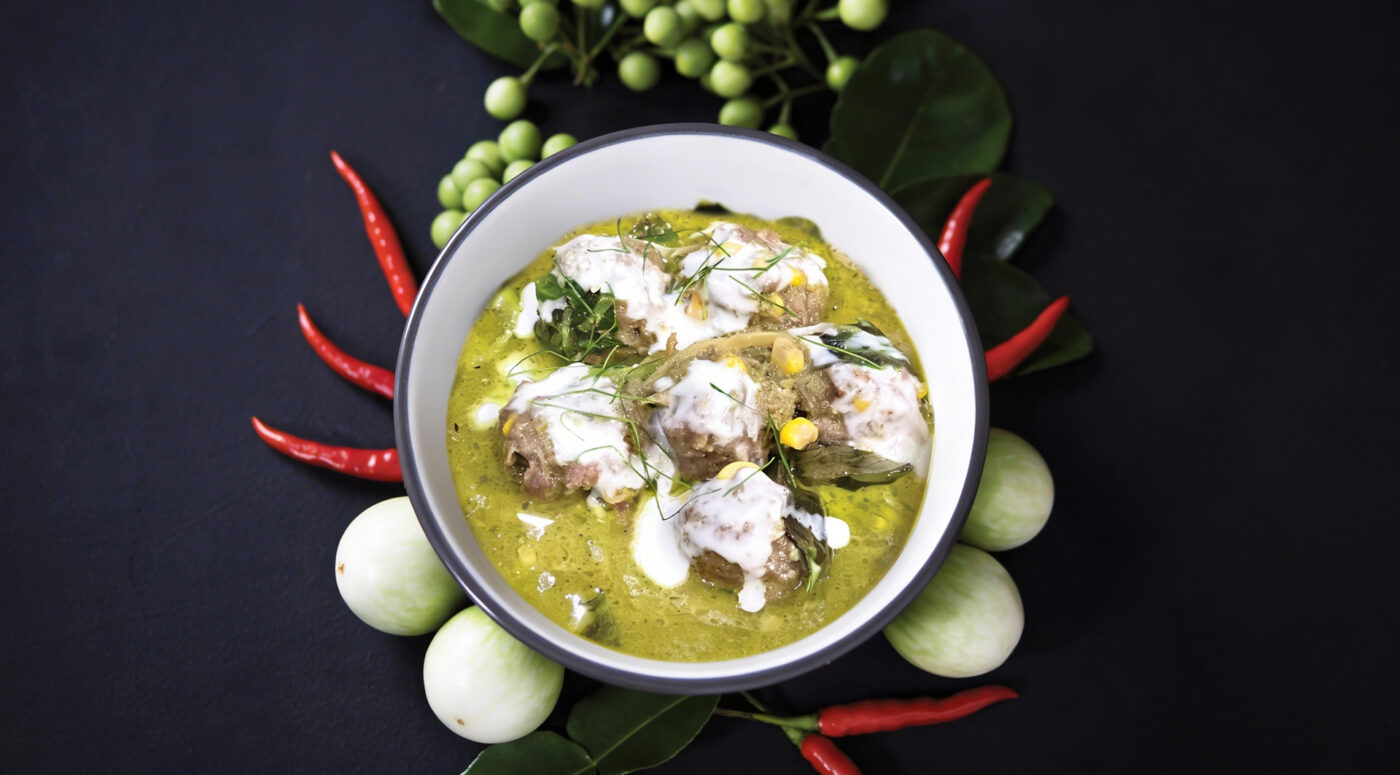
Our family moved to America in 1966 when my father was hired by The Voice of America. He had been recommended by another Bunnag, Princess Nu (Sasithornpatnwadi), who was already working there by the time we arrived. My sister, who was twelve years older than me, ran our family kitchen with my mother’s help, not the other way around. Our menu at this stage mostly rotated around Gaeng Kiew Wan Neu (my fathers favorite) – with the big purplish aubergine substituted for the round Thai eggplants, Gaeng Massaman, Pad Prik King, Gaeng Kua Sapparot and Nam Prik Kapi (without Pla Tu fish, as there were none to be had back then).
Washington, D.C. at that time had a small Chinatown where my mother shopped for some ingredients, but mostly, our spices and Thai foodstuffs came via the diplomatic channel as we were on close terms with the Thai Military attaché. The capital, however, had a bustling seafood market at the waterfront very near our apartment, where we bought Maryland blue crabs, shrimps, flounder, shad and shad roe. We fried the shad to substitute for the Pla Tu.
After university, my sister got a job at the World Bank, and moved out to share an apartment with a co-worker who was a French woman. They traveled together to France on vacations, and this friend (who was from Marseille) taught her Bouillabaisse, Aioli, and other Provençal dishes. From this point on, my sister rarely cooked Thai food again but became very good at making Western fare. And thus, my sister left behind the culinary lessons of Khun Ya Jeeb. But for some reason, that name was etched in the back of my mind, and even though I really love to eat Thai food, I had no interest in cooking at all at that point in time.
The Forty-Year Search
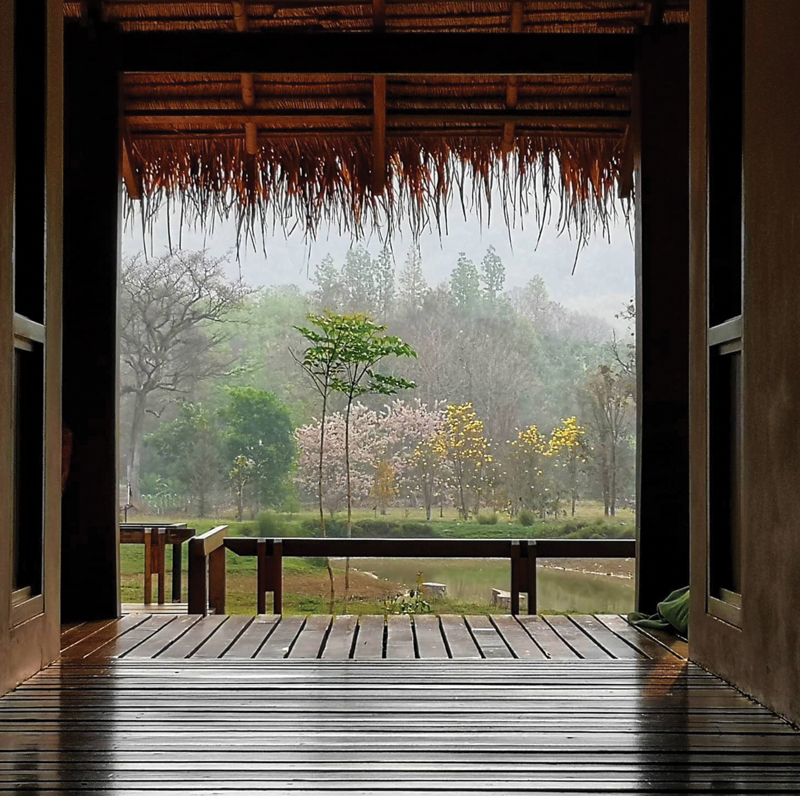
In 1981 I married a Thai who came from the Svasti and Amranand clans. I remember asking one of his Svasti aunts, who was an avid eater, whether she had heard of Jeeb Bunnag. This aunt knew practically everyone in Bangkok society but she said the name didn’t ring a bell, although she knew many other Bunnags. For the next twenty years my husband and I traveled extensively for work, using Washington, D.C. as our base, while spending most Christmas holidays in the hills of Pa Mieng, north of Chiang Mai, at a secluded cottage we had bought. But still, every time I met a Bunnag I would ask if they knew or had heard of this lady named Jeeb Bunnag. Nobody did. Eventually, the name Khun Ya Jeeb ebbed away from me too.
The First Clue
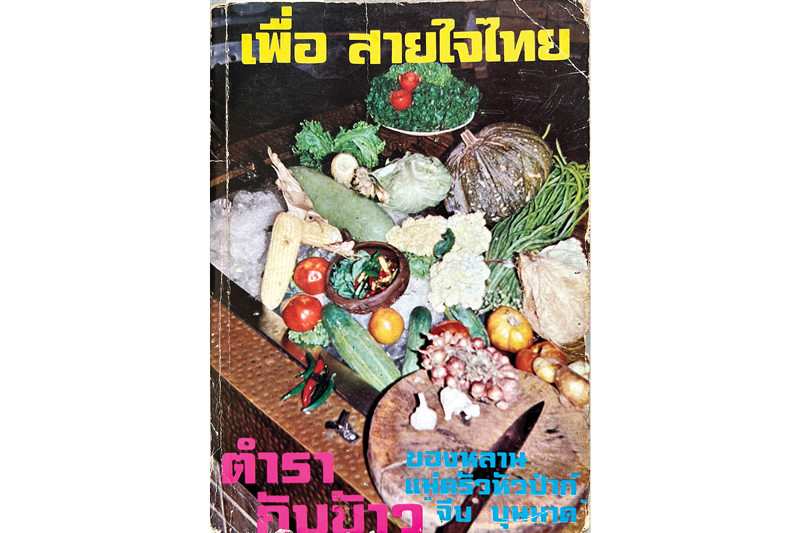
In 2002, I bought a book called Thai Food, written by a chef named David Thompson. I flipped through it, read a few recipes and thought: finally, a Thai cookbook with substance. Then on page 133, a familiar name popped up. It was Jeeb Bunnag. Excitedly, I showed the book to my mother, saying, “Look Mummy, he’s written about Khun Ya Jeeb!” She smiled and said, “Huh … it took a farang (foreigner) to recognize her.” I devoured this book and felt that it was the best, most comprehensive Thai cookbook in English to date. Of course, Thompson never met Jeeb Bunnag in person but from what he wrote, he had learnt to cook Thai food in a refined manner from someone who had learnt the skills directly from her. The book made him very, very famous.
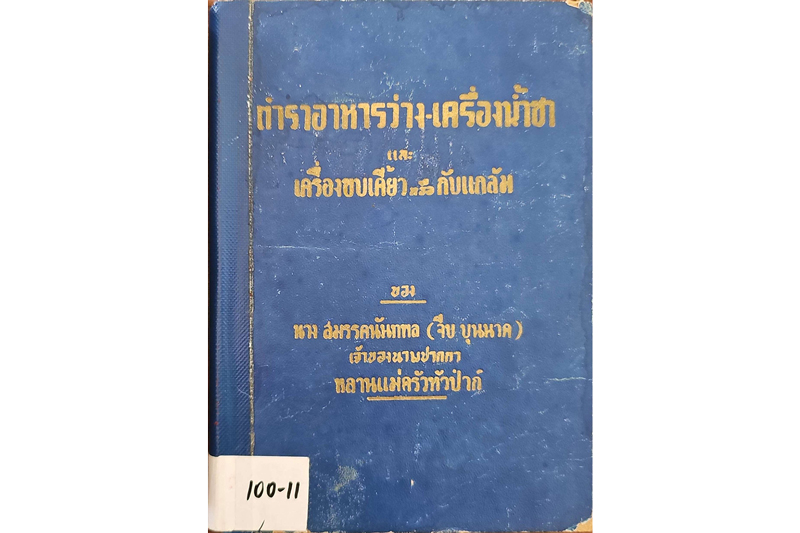
The Digital Discovery
Over a decade passed until one day I came across a Thai cooking blog. There are many blogs on Thai cuisine but I had never seen one like this. It was extremely well written, meticulously researched, erudite – simply put – in a class of its own. It was called Thaifoodmaster. And on this blog the name Jeeb Bunnag appeared again.
The blog was written by someone named Hanuman Aspler. I lurked on this blog for years, on and off, astounded by the information that this man was giving online. For free! His deep understanding of the history and gastronomy of Thai food was impressive. Perusing his articles I was convinced that we now have a Thai food cuisineologist.
From then on, if I wanted to find a recipe my family once used, Hanuman’s site was my go-to. I knew that it would give me a complete recipe, or near – very near – to the dishes that my family made.
The Meeting
By the time I am writing this, it is now 2025. On one, not so fine August day, with rain and cloud intervals at Pa Mieng, I thought about my mother and sister who had both passed away years prior. And I thought about Khun Ya Jeeb. I decided to write an email to Hanuman Aspler that morning.
At this point, he had set up a cooking school called Three Trees Doi Saket. Incredibly, this school turned out to be less than two miles away from our cottage! I knew he was there years ago yet had held back from reaching out for various reasons. Nostalgia, however, is a potent stimulant, and all of a sudden I was ready to meet him if he was willing to meet me. Right away, he wrote back a warm email inviting both my husband and I to visit. He had a class going and suggested we should join. We did. It turned out to be revelatory.