Bangkok’s creative landscape is entering a new chapter. Long celebrated for its vibrant street life, rich cultural heritage, and dynamic contemporary culture, the Thai capital is now gaining recognition as a serious art destination in its own right. Across the city, ambitious museums, independent galleries, artist-led initiatives, and revitalized historic neighborhoods are creating new opportunities for artistic exchange and discovery. From converted warehouses and heritage shophouses to riverfront cultural hubs, Bangkok’s art scene is expanding in ways that feel both locally rooted and internationally connected. For visitors willing to venture beyond the usual attractions, a fascinating cultural journey awaits.
Bangkok has long had the ingredients of a compelling art city: extraordinary talent, richly textured neighborhoods, and a creative life that spills from studios into cafés, cinemas, and the street. What feels different now is the scale of ambition. Across the Thai capital, a new wave of cultural spaces is drawing international attention, bringing Thai and global artists into sharper focus.
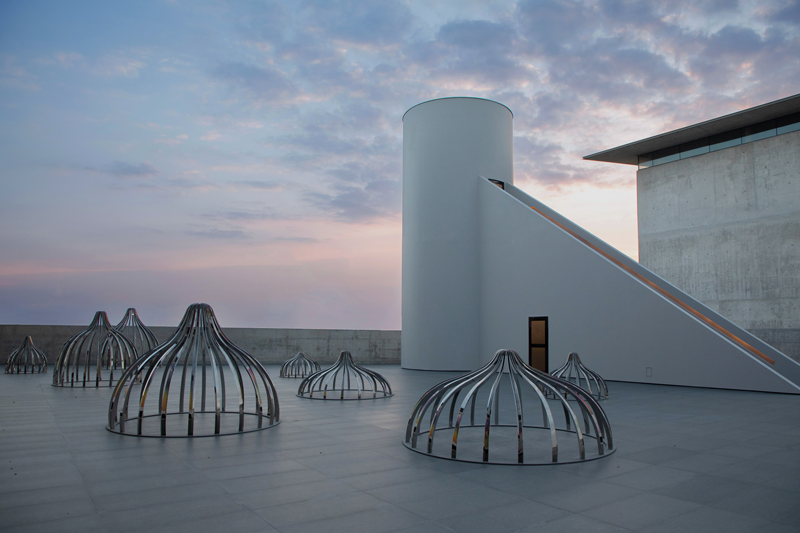
This energy is being felt across the city. In the Klong Toey district, a museum devoted to contemporary art, Dib Bangkok, signals a new level of institutional ambition. In Chinatown, a quieter dialogue between experimentation and legacy is emerging. And along Charoen Krung Road, a network of venues has transformed one of Bangkok’s oldest roads into a vibrant artistic corridor.
Many of Bangkok’s most significant new art spaces are supported by private patrons, helping create lasting cultural impact rather than short-term spectacle. With art taking shape across the city, often in neighborhoods where everyday life continues uninterrupted, travelers and locals alike have a lot to be excited about. Street food, nightlife, and temples are no longer the capital’s sole draw – these contemporary art hotspots should also be explored on your next trip to Bangkok.
ART ON A NEW SCALE
Klong Toey
Dib Bangkok (Thurs-Mon: 10:00-19:00) recently announced its arrival with clarity and confidence. The 75,000-square-foot museum unfolds within a reworked 1980s warehouse, its raw concrete softened by Thai-Chinese window grilles and sawtooth skylights that diffuse Bangkok’s intense daylight. Located between Rama IV Road and Sukhumvit, it sits within Klong Toey, a district shaped by development and everyday life.
Opened in December 2025, Dib has already been named one of TIME’s World’s Greatest Places of 2026. Realized by Purat Osathanugrah, a member of one of Thailand’s prominent business families, and building on the vision of his late father Petch Osathanugrah, the museum reflects a new generation of patronage focused on enduring cultural platforms. Where earlier art spaces in Bangkok were defined by experimentation within modest means, Dib marks a new phase characterized by scale and international visibility.
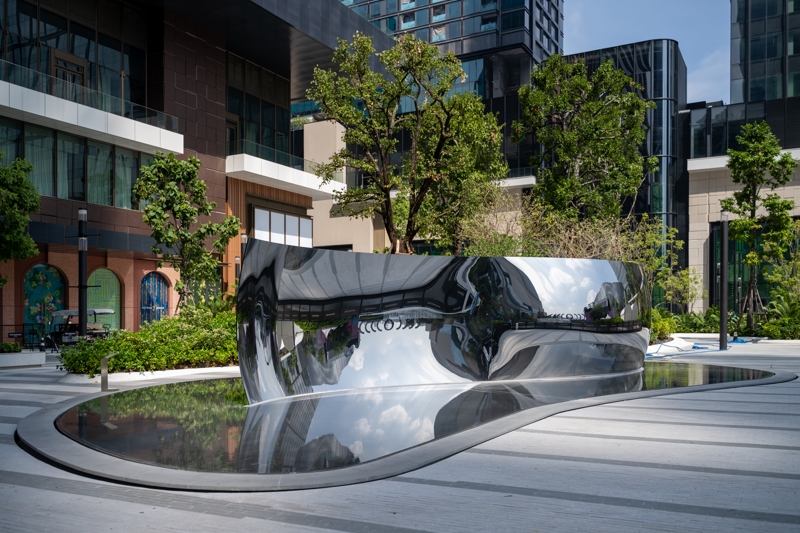
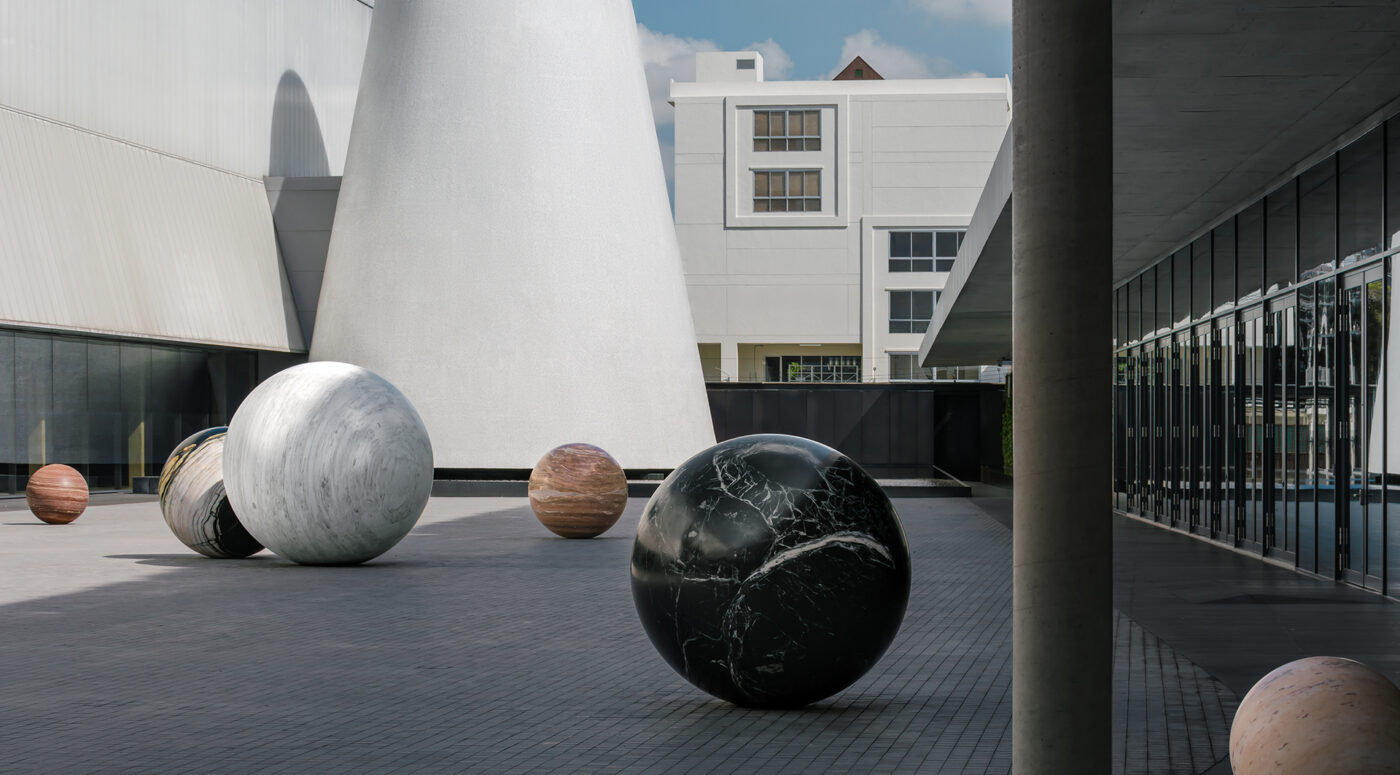
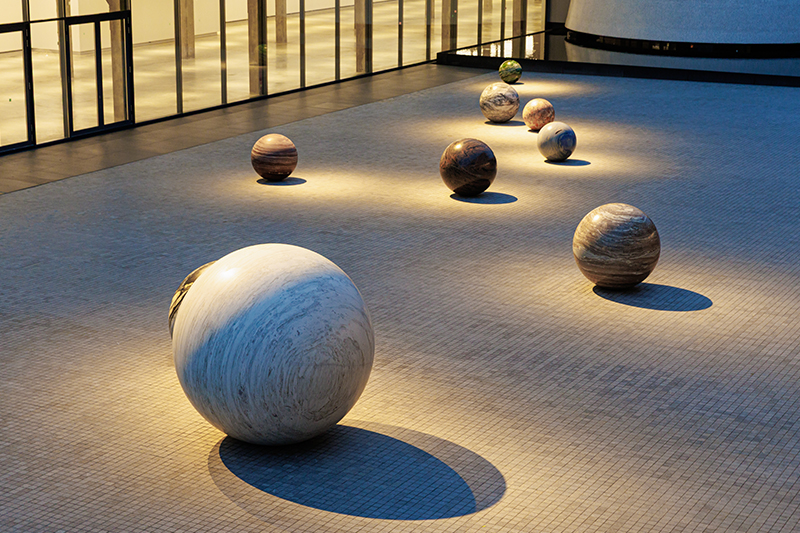
Its growing collection of over 1,000 works by more than 200 artists worldwide signals long-term ambition, with its inaugural exhibition offering a compelling first glimpse. Before entering the galleries, the experience begins in the courtyard. A conical structure known as the “Chapel,” clad in porcelain tiles inspired by traditional temple ornamentation, rises from a reflective pool. Just beyond it, Alicja Kwade’s Pars pro Toto, a constellation of monumental stone spheres, anchors the space with gravitational presence, while Pinaree Sanpitak’s Breast Stupa Topiary extends this dialogue into the landscape with its forms evoking femininity and spiritual architecture. James Turrell’s Straight Up, a two-story skyspace installation, reframes the sky itself, drawing attention to the act of looking.
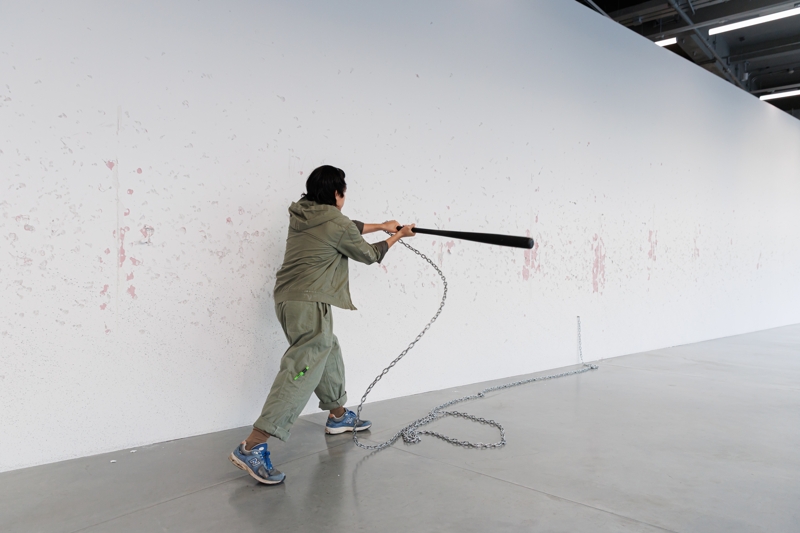
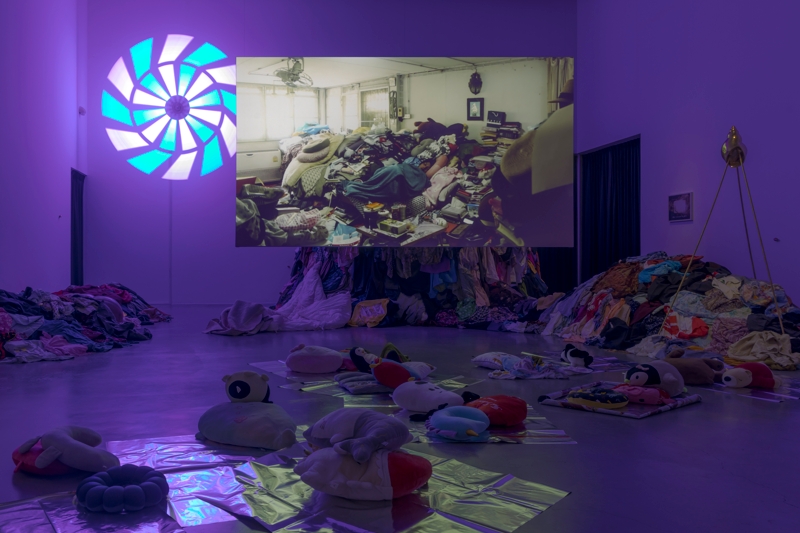
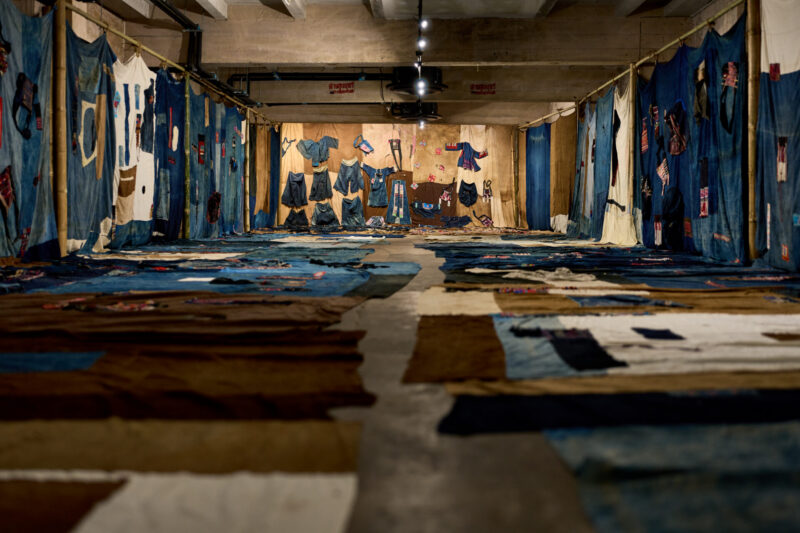
On view through August 3, “(In)visible Presence ” brings together 41 artists in a multisensory exploration of memory and the unseen, moving across sound, scent, light, and material. The experiences spanning the three floors unfold as a deeply affecting journey that moves between physical immersion and quiet introspection. Certain works actively engage and even unsettle, such as Marco Fusinato’s Constellations, where viewers can swing a chained baseball bat against the wall, triggering a sudden, body-shaking blast of sound. Works on higher floors are more contemplative in nature. Be sure to take in Sho Shibuya’s painted sunrises, layered over daily newspapers, which soften the noise of the world into gradients of light.
Our sense of smell is even awakened with Montien Boonma’s Arokayasala: Temple of Mind, where the scent of herbal pastes emanates from sculptural lungs housed within towering aluminum structures inspired by medicine drawers, drawing awareness to breath and its potential to heal. The atmosphere is at once intimate and expansive, offering profound works that invite visitors to feel as much as observe. Taken together, Dib Bangkok offers not just a sequence of exhibitions, but a shift in perception – one that lingers after you leave.
MEMORY MEETS EXPERIMENTATION
Chinatown
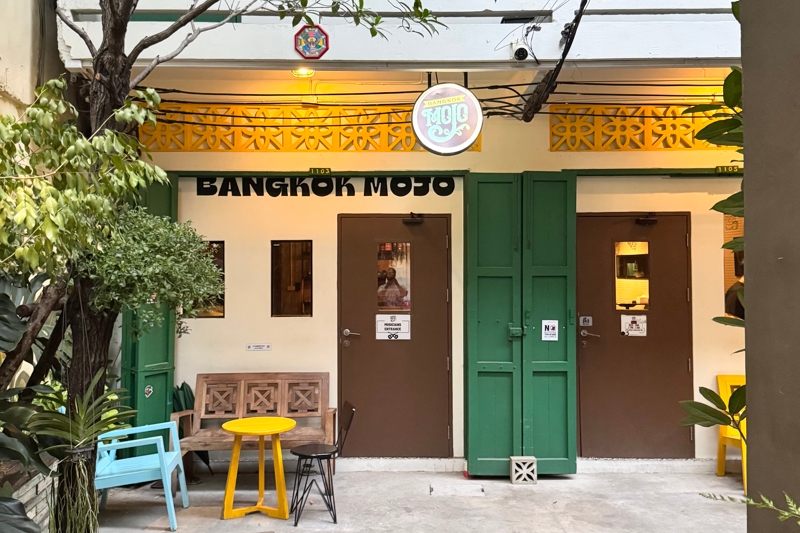
Step off Yaowarat Road into Soi Nana and the city reveals a cooler, more under-the-radar side. The narrow street, lined with aging shophouses and scents of former Chinese herbal medicine shops, has become one of Bangkok’s most compelling creative enclaves, where gallerists, bar owners, and businesses have reactivated the area without erasing its past. By day, galleries open quietly within preserved spaces; by evening, bars and restaurants emerge alongside them, forming a rhythm where art becomes part of the neighborhood’s natural flow.
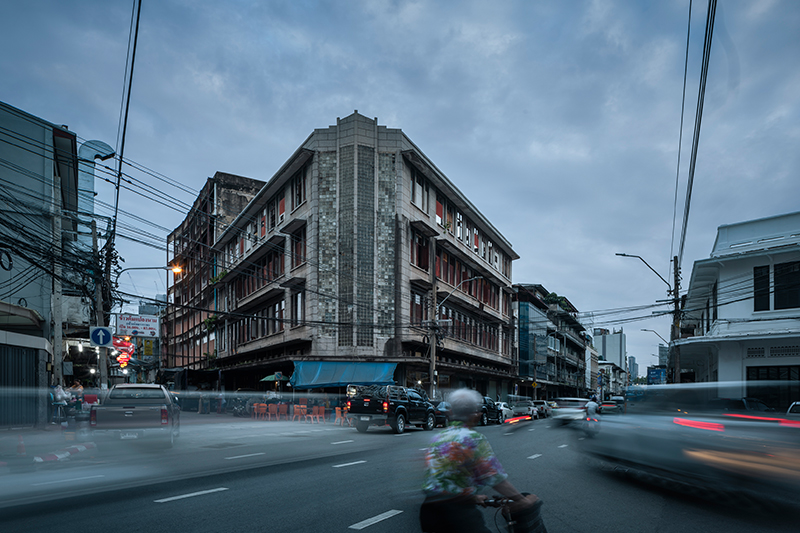
Bangkok Kunsthalle (Wed-Sun: 14:00-20:00) occupies the former Thai Wattana Panich printing house. Rather than smoothing over its past, the space embraces it: exposed walls and raw surfaces retain the building’s industrial memory. Each exhibition unfolds in response to this architecture, making the experience feel less like a conventional gallery visit and more like navigating a site where ideas are still in formation.
As its director Stefano Rabolli Pansera explains, Bangkok Kunsthalle was conceived less as an exhibition venue and more as a place of production. “It is a laboratory where artists can test ideas and develop works in dialogue with architecture,” he says. “Patrons are not only funding exhibitions; they are helping to create platforms where artists, thinkers, and audiences can encounter one another.”
Bangkok Kunsthalle was founded by Marisa Chearavanont, a philanthropist and collector – part of a broader pattern in which private individuals play a defining role in shaping the city’s cultural landscape.
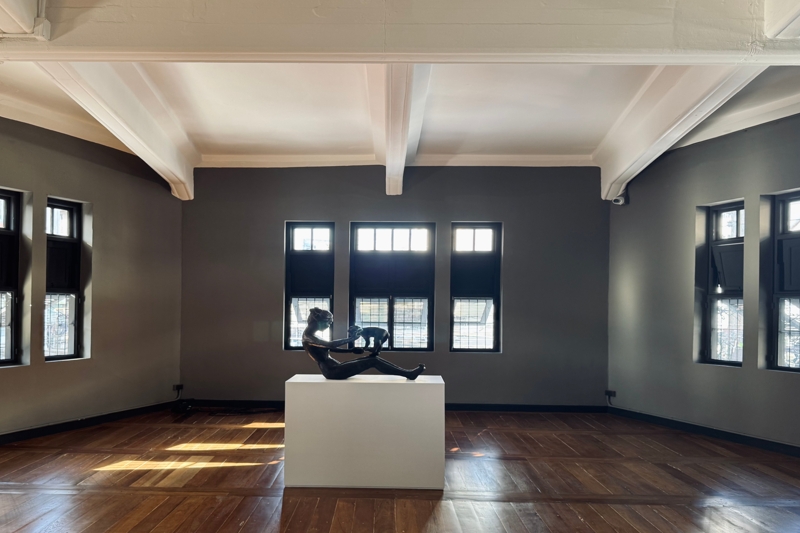
Just across the street, Misiem‘s (Thurs-Sun:13:00-19:00), which opened in late February 2026, offers a more intimate engagement. Founded by Klaomard Yipintsoi, the space is dedicated to the work of her grandmother, Misiem Yipintsoi—a pioneering artist who became a key figure in Thai modern art, as well as a mentee of Silpa Bhirasri, the Italian-born founder of modern art education in Thailand.
Inside, the bronze sculptures are displayed openly, allowing viewers to move around them and take in each work from different angles. Misiem’s sculptures are instantly recognizable: figures caught in motion – leaping, skipping rope, or in the poised steps of a ballerina – their slender limbs giving each form a playful rhythm. The works reflect Misiem’s belief that art can emerge from everyday life through movement, emotion, and observation. “Art exists all around us,” Klaomard says. “But once it enters an institution, we simply lift it up so people can notice it more clearly.”