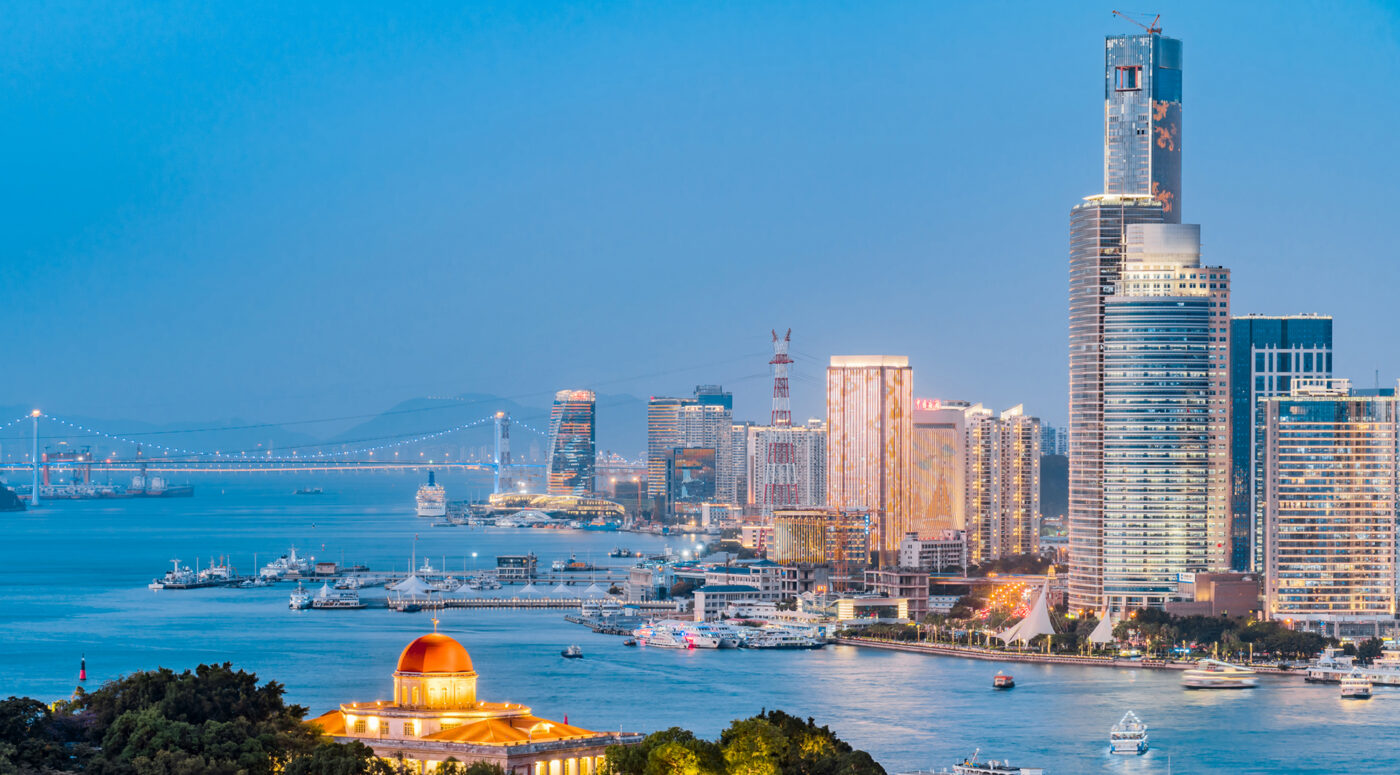
Xiamen is a city that makes more sense when viewed from the water. Facing the Taiwan Strait on China’s southeast coast, it has spent centuries looking outward, shaped by trade, migration, fishing, coastal defense, and the movement of people between shores.
That connection is still easy to see today. Ferries cross busy channels, former dockside neighborhoods have found new roles, and long stretches of coastline remain part of daily life rather than simply a backdrop for visitors. Even some of Xiamen’s best-known landmarks tell stories that begin with the sea.
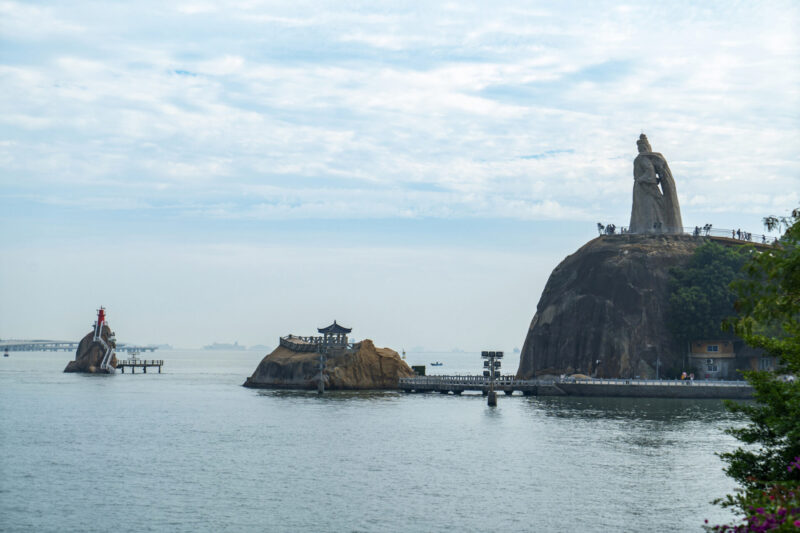
To understand this coastal city beyond its skyline, start with four places where different chapters of its maritime identity remain visible.
GULANGYU
An Island Shaped by Connections
The short ferry journey to Gulangyu immediately changes the perspective on Xiamen. Across the Lujiang Strait, the compact island developed through centuries of maritime connections, particularly during the 19th and early 20th centuries, when people and ideas arriving from overseas left their mark on its architecture and culture.
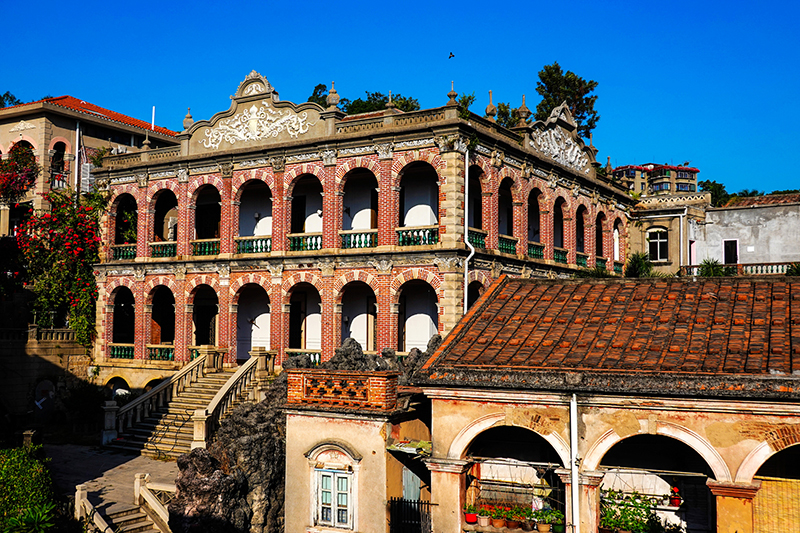
European-style villas stand alongside traditional Chinese buildings, while narrow pedestrian lanes eventually lead back toward the shoreline. Yet Gulangyu never feels entirely separated from the city opposite. Xiamen’s waterfront remains visible across the water, a reminder of the channel that helped shape both places.
Recognized as a UNESCO World Heritage Site, the island offers perhaps the clearest introduction to Xiamen as a city formed through exchange.
SHAPOWEI
From Fishing Harbor to Creative Quarter
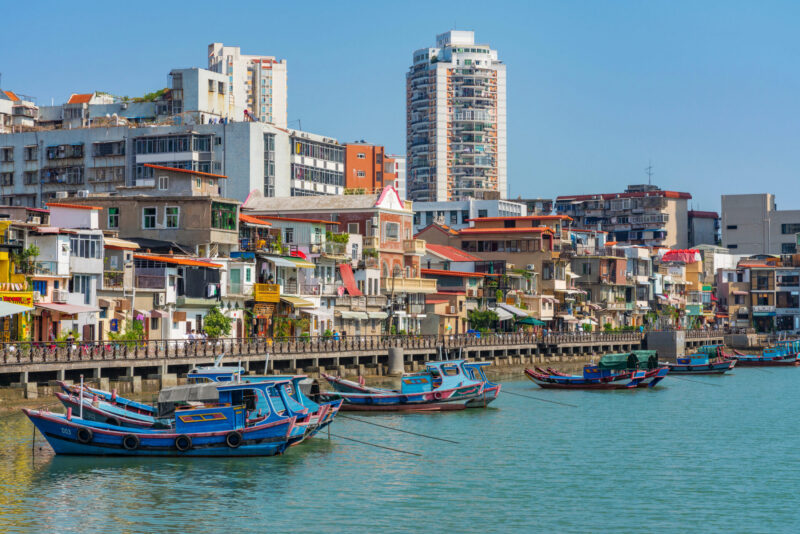
Before cafés, studios, and independent shops arrived, Shapowei was closely tied to Xiamen’s fishing community. Its sheltered harbor provided a place for boats to return from the Taiwan Strait, making the neighborhood part of the working maritime life of the city.