• Skip to primary navigation
  • Skip to main content
  • Skip to footer

Sawasdee

Sawasdee
  • Happenings
  • Inspiration
  • Food & Drink
  • บทความภาษาไทย
  • Thai Airways
  • Download e-Magazine
  • Toggle Search

    City Guides

    Bangkok

    วัดป่าดาราภิรมย์ (เครดิตรูปภาพ: iStockphoto)

    Chiang Mai

City Guides

วัดป่าดาราภิรมย์ (เครดิตรูปภาพ: iStockphoto)

Chiang Mai

Bangkok

Tracing Bangkok’s Timeless Heart: A Journey Through Phra Nakhon

Inspiration

Bangkok’s soul is timeless. Beyond the modern sprawl, Phra Nakhon unfolds as a living history, where every corner reveals a new story and every alley holds a surprise.

December 31, 2025

Text: Kunakorn Vanichviroon

7 min read

Facebook LinkedIn Line Viber Pinterest Twitter Email

Phra Nakhon is the Bangkok that existed long before the skyscrapers — a district where ancient temples, century-old shopfronts, and slow-moving canals reveal the city’s enduring spirit. This is where the memory of old Bangkok lingers in bridges, fortresses, family recipes, and the gentle rhythm of its waterways. To walk these streets is to witness the city’s heritage living quietly in everyday life.
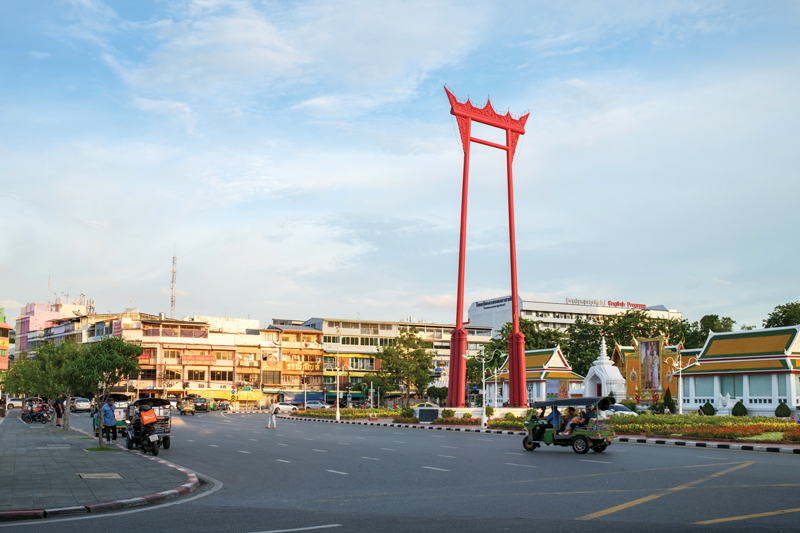
The Giant Swing
The Giant Swing

If the relentless rhythm of modern Bangkok – its glass-clad towers and sprawling malls – begins to dull your senses, take a slow detour into the heart of its heritage. Set aside a half day, dress comfortably, and venture into Phra Nakhon, the district where Bangkok’s soul still lingers in its kitchens, temples, and meandering alleyways. Once the name locals used for the capital itself, Phra Nakhon remains a living archive of the city’s many layered past – a place where stories are etched into timeworn walls and rise gently from simmering street pots.

As both a historian and cultural guide, I extend this invitation not merely as a suggestion, but as a quiet challenge: to abandon the familiar thoroughfares of modernity and embark upon a route that reveals the city anew from the vantage point of its waterways.


From Busy City to Old City


Board a public water taxi at Hua Chang Pier, just steps from Siam BTS Station, and cruise along the Saen Saep Canal. In a mere 15 minutes, the urban congestion dissolves behind you. As the boat glides under rusted railway bridges, temples long obscured by concrete will emerge into view. When the golden spire of Phu Khao Thong, or the Golden Mount, glimmers faintly on the horizon, prepare to disembark at Phan Fa Lilat Pier — your gateway into Bangkok’s past.
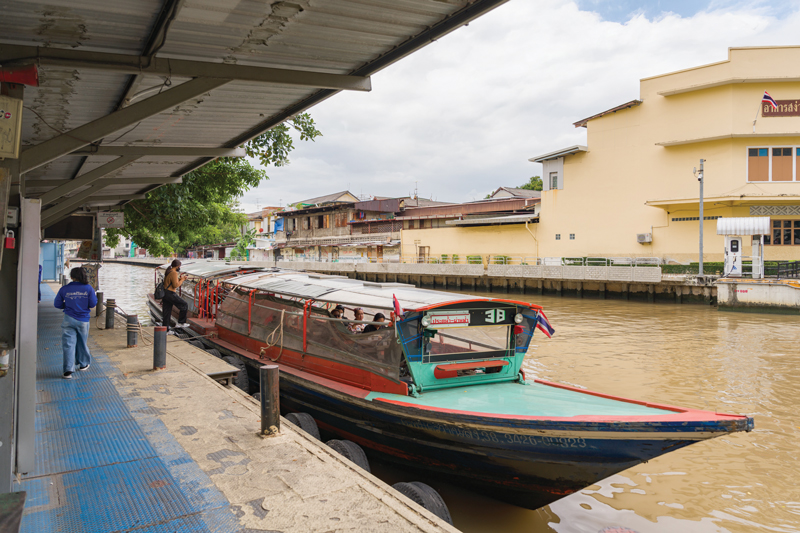
Phan Fa Lilat Pier
Phan Fa Lilat Pier
Mahakan Fort
Mahakan Fort

Phan Fa Lilat Pier is more than a transport node — it is a historical threshold. Two centuries ago, this convergence of roads stood at the city’s eastern perimeter, fortified by Mahakan Fort against threats real and imagined. Though the fort remains, today we cross a more poetic structure: Mahat Thai Uthit Bridge, better known as the Crying Bridge, which was built over 110 years ago. Its name derives from the delicate bas-reliefs portraying mourners, hands pressed to faces, commemorating the death of King Rama V in 1910 — a testament to national grief rendered in stucco.
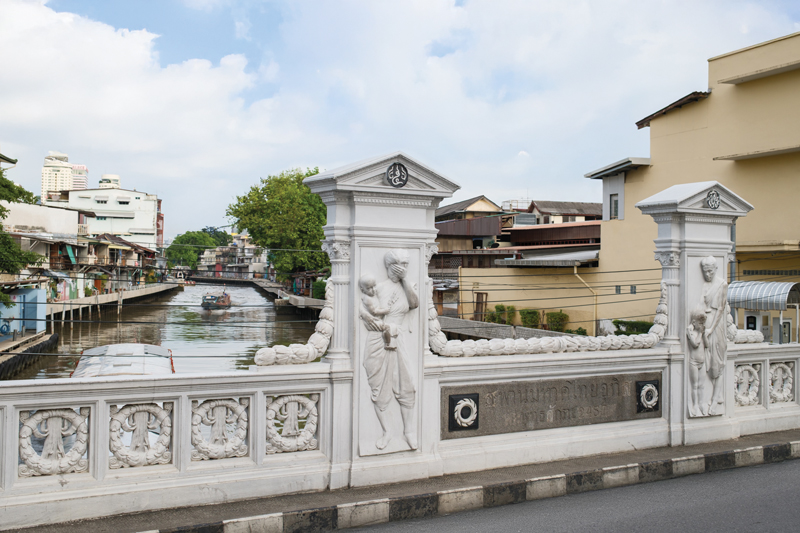
Mahat Thai Uthit Bridge

Scale the Golden Mount


Just beyond lies Paribatra Road, once the bustling epicenter of Bangkok’s timber trade. Though many merchants have migrated to modern premises in Bang Pho located about 10 kilometers away, a few traditional shophouses are still standing, but many stores that used to sell processed wood in planks or logs have now turned to selling wooden door panels instead. Some have reinvented themselves as boutique cafes or artisanal souvenir shops, selling hand-carved elephants and bespoke nameplates — souvenirs redolent of a slower time.
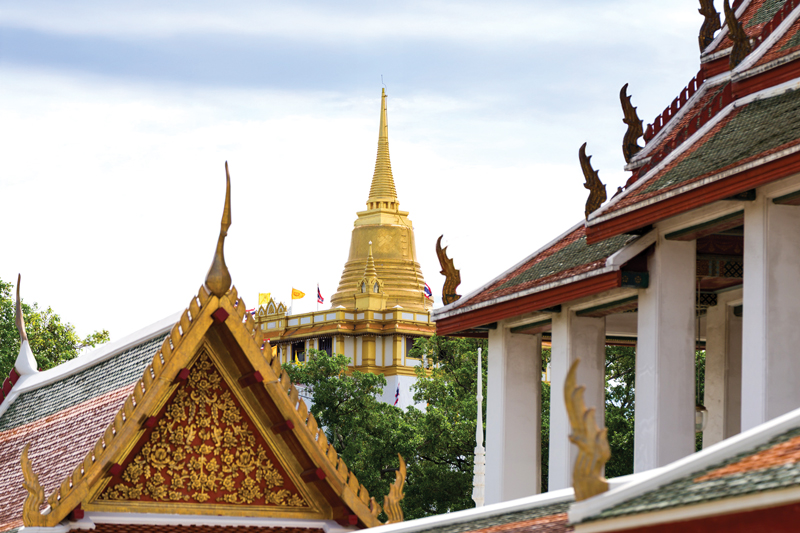
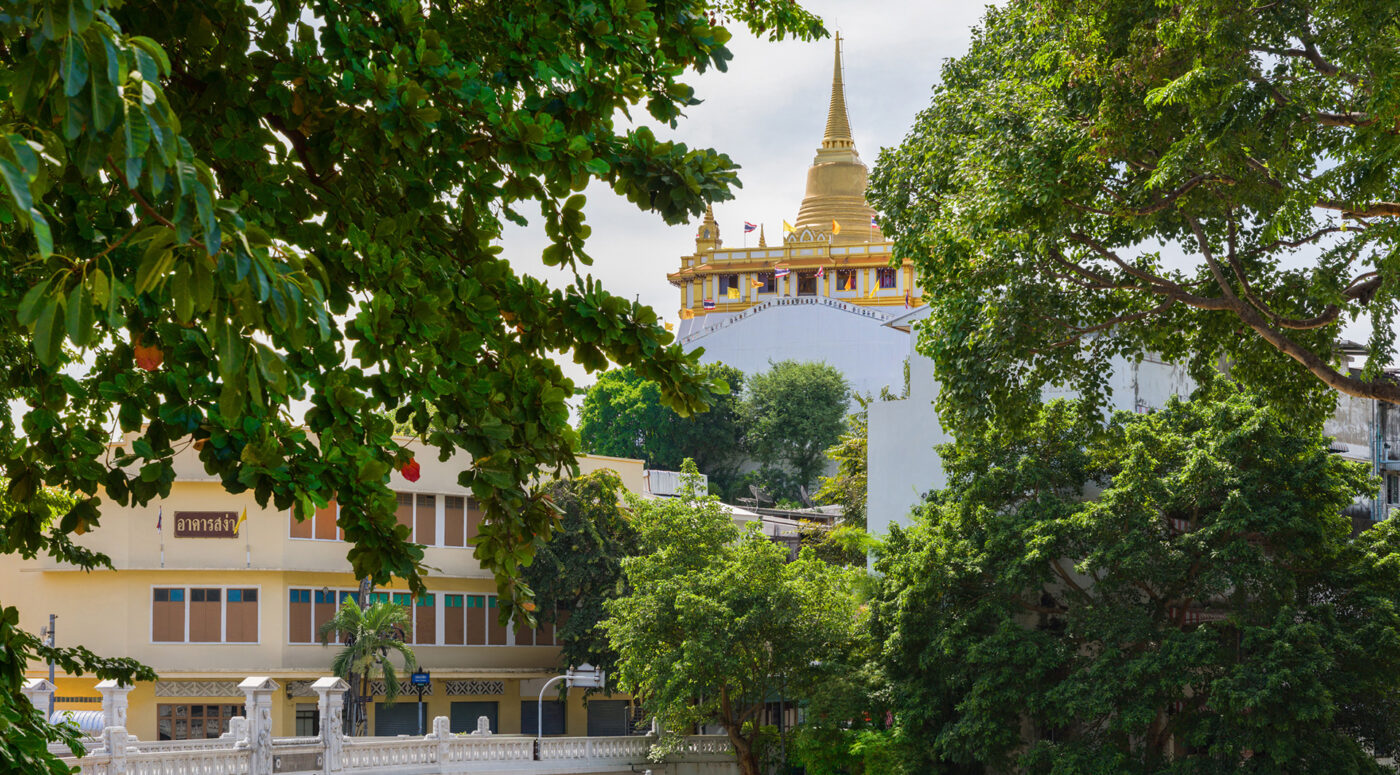
Phu Khao Thong
Phu Khao Thong

Should your energy permit, ascend the 300-plus steps of the Golden Mount. This man-made hill was originally intended to be built in the form of a large prang-style tower outside the old city walls. Though the early construction faltered and was abandoned for years, it was later reborn as the gilded bell-shaped stupa of Wat Saket, making it a striking departure from the original intention. From its summit, the city unfolds below in panoramic splendor — a rewarding vista that recalls the Bangkok of centuries past.

Beneath the serene golden dome lies a darker chapter of history. Encircled by canals, Wat Saket was once the final resting place for the unclaimed dead, particularly during the cholera outbreaks of the early 19th century. Bodies were brought to its cemetery grounds for their last rites. Near the foot of the mount, a haunting sculpture stands in quiet remembrance, ensuring this collective memory endures rather than being washed away by time.


The Macabre and The Mouthwatering


Returning to Paribatra Road, cross a canal and arrive at Samran Rat Intersection — once known by its more macabre moniker Pratu Phi, or “Ghost Gate.” In centuries past, this was the route by which the deceased were carried beyond the city’s sacred boundaries for final rites. Today, the air is filled not with somber echoes but with lively aromas of culinary treasures. Just a few steps away stands Thipsamai, the venerable Pad Thai institution that has delighted diners since World War II.

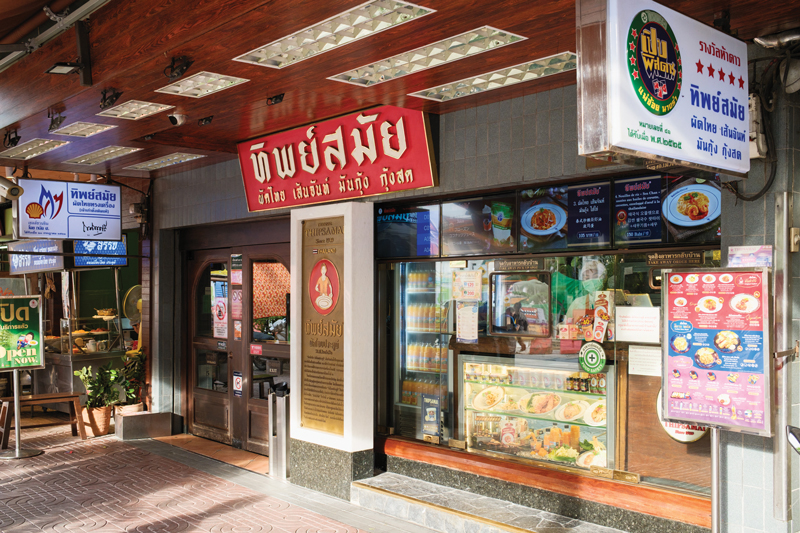
Thipsamai
Thipsamai

Strolling along Samran Rat Road, one discovers a delicate fusion of nostalgia and reinvention. While the bustling wet market tucked away in an alley behind the row of shophouses has quietened, local favorites like Yentafo noodle and duck porridge still draw queues. Even modern sensibilities find a place here — Tokyo’s minimalist Onibus Café has opened its first Thai branch on this very street, nestled alongside a venerable bookshop, Passport Book, that has curated literary gems for over two decades.


Experience the Serenity of Wat Thepthidaram


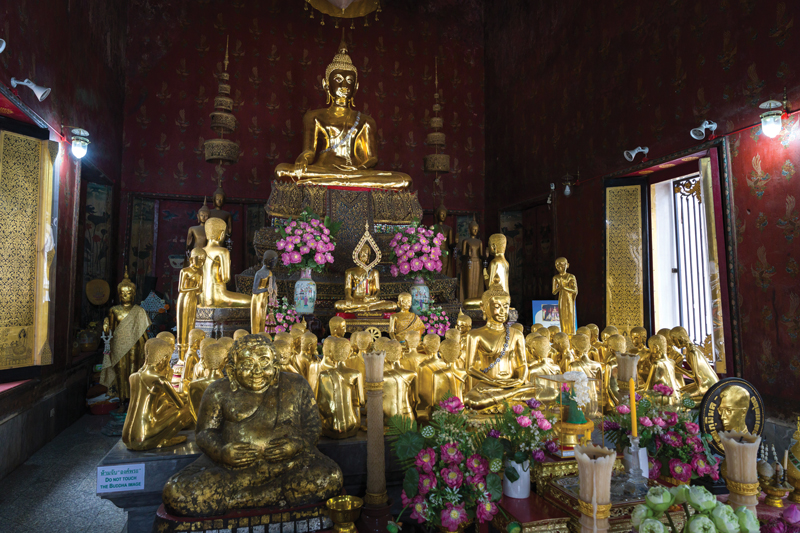
A key element that lends Samran Rat Road its distinctly Bangkokian character is the sight of celestial giants and angels adorning the spire of the prang of Wat Thepthidaram. The temple’s graceful floral murals, rendered in a delicately sweet color palette, radiate a sense of serenity and refinement. Commissioned by King Rama III in honor of his elder daughter Krommameun Apson Suda Thep, this temple houses one of the rarest religious features in Thailand: 52 cast figures of female monks made from tin, all in contemplative poses.

Wat Thepthidaram
Wat Thepthidaram

The monastic living quarters, or Sanghavasa, of Wat Thepthidaram still exude the calm grace of a bygone era — this quiet enclave feels more akin to a small village than a city temple. The weathered roof tiles, mottled with age, seem to whisper stories from 1840, when the great poet Sunthorn Phu resided here. His former quarters have since been transformed into a modest museum, inviting visitors to glimpse his world and listen to the lyrical verses recited by the temple’s gifted guides.


The Civic Grandeur of Bangkok City Hall


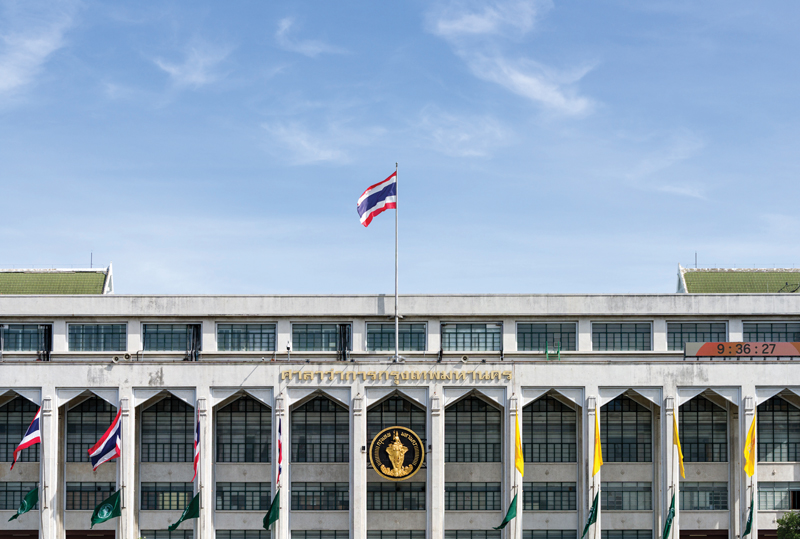
From the serene enclave of Wat Thepthidaram and its Sanghavasa quarters, Samran Rat Road stretches onward, guiding visitors through the heart of historic Phra Nakhon. This rather quiet and tranquil street gradually opens into the broad plaza in front of Bangkok City Hall, a monumental building designed by HSH Prince Samai Chalerm Kridakorn, a distinguished architect of the Fine Arts Department. His vision harmonized traditional Thai architectural elements with the clean, geometric aesthetics of the 1950s. The tall colonnade conveys civic authority and solemnity, while the triangular window frames subtly echo the roofline of Wat Suthat Thepwararam, which rises serenely across the way.

Bangkok City Hall
Bangkok City Hall

Construction of Bangkok City Hall unfolded in phases, stretching over several decades. In the 1960s, the government of Field Marshal Sarit Thanarat, the 11th Prime Minister of Thailand during 1959–1963, imposed budget cuts, forcing the cancellation of a planned giant clock tower, which would have soared to the height of a ten-story building. Intended as a city observation point, the tower’s foundation piles had already been driven into the ground before the project was halted. At the time, some architects lamented the lost landmark, while others breathed a quiet sigh of relief at sparing the city from a concrete obelisk that might have overshadowed the Giant Swing across the plaza.

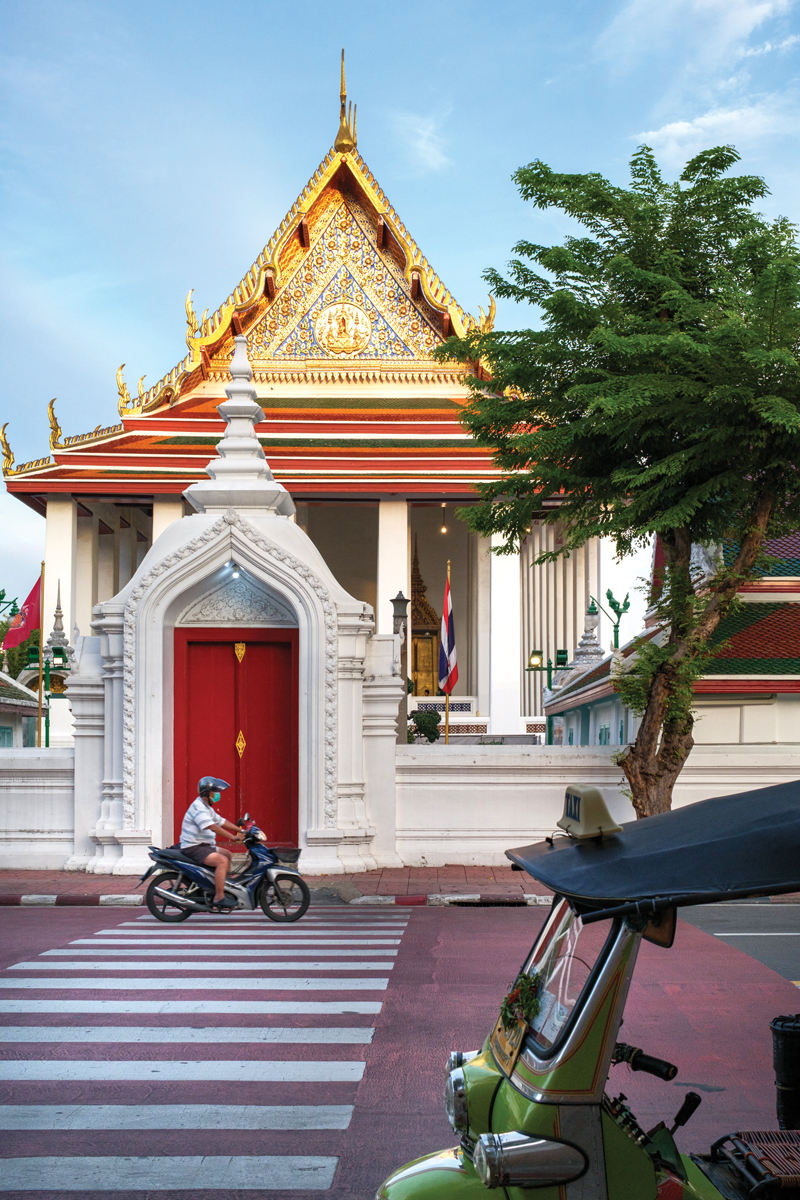
Wat Suthat Thepwararam

Discover the Elegance of Old Bangkok


A few steps away lies Mahannop Road, a veritable haven for gourmands. Here, culinary legacies thrive in family-run establishments where secret recipes have endured across generations. Don’t miss the Hainanese Khanom Jeen Ko Lun, its velvety sauce contrasting crisply roasted pork, or the richly layered fish maw soup at Mit Phochana — a dish that evokes childhood comfort for many locals.

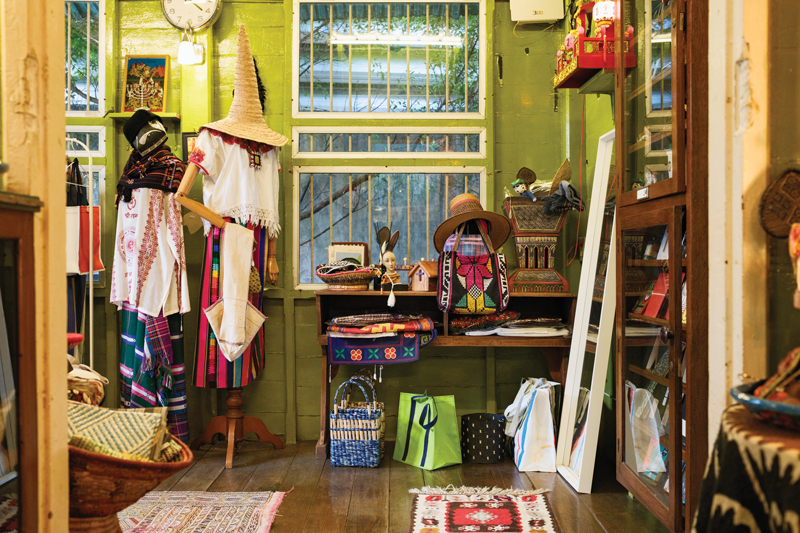
World at the Corner bookshop on Mahannop Road

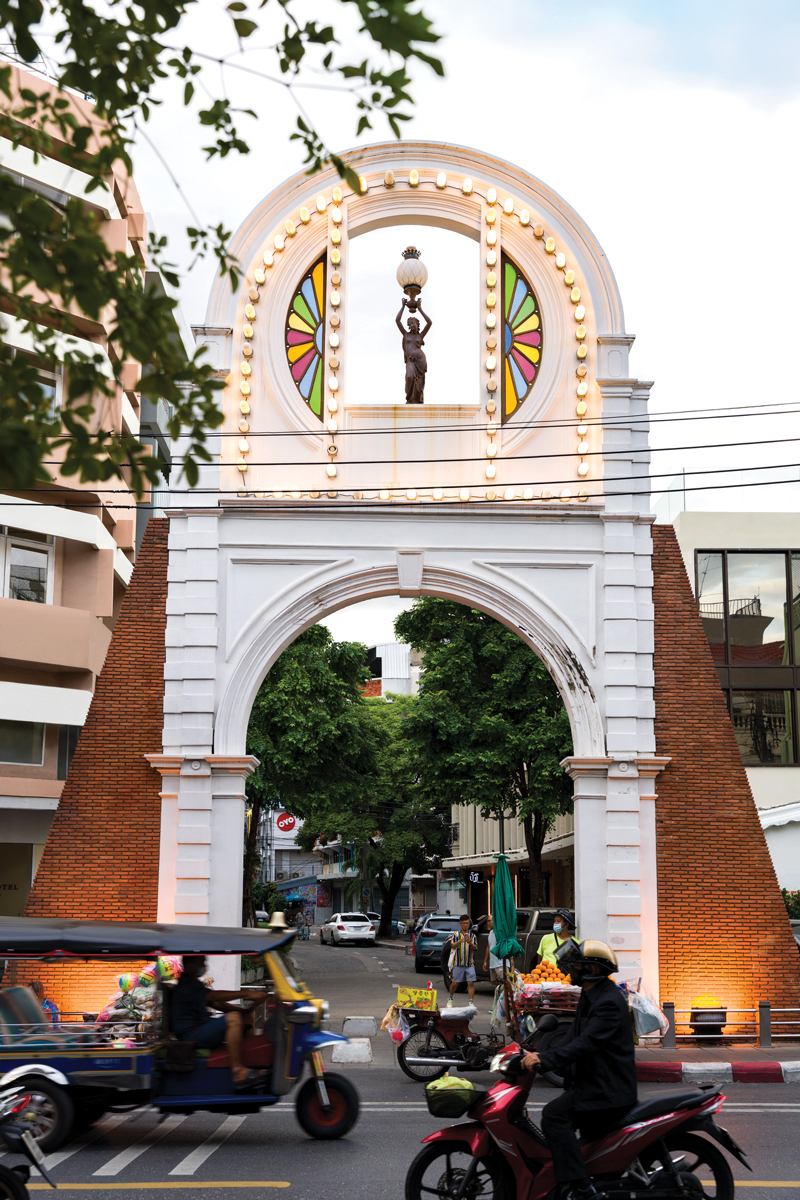
Sated but not quite finished, head left onto Tanao Road for dessert. Pass beneath the ornate Western-style arch — once the entrance to the now-vanished Sanphasat Suphakit Palace, destroyed by fire — and follow the enticing aroma of sizzling taro fritters from JNE original. Just a few doors away, K. Panich continues its century-old tradition of pairing luscious coconut-infused sticky rice with golden mangoes — an essential Bangkok indulgence.

The entrance of the former Sanphasat Suphakit Palace

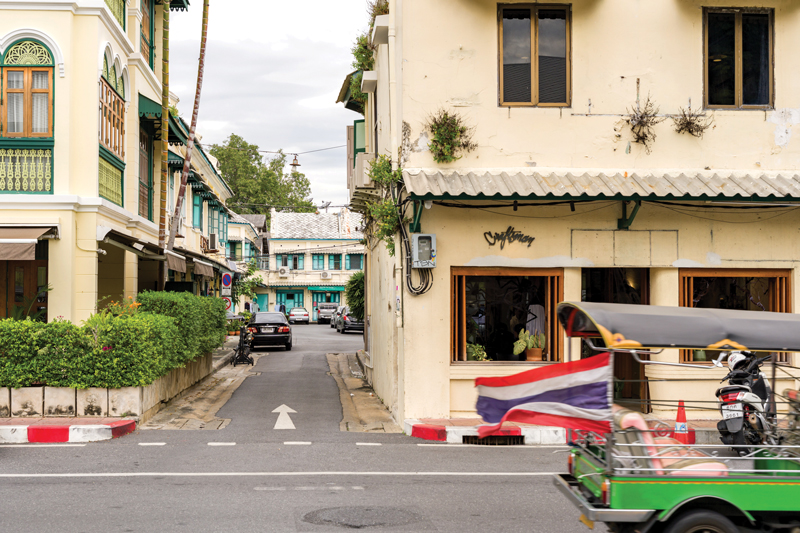
Directly across the street lies Phraeng Phuthon, a hidden architectural gem. Once a nobleman’s residence, it was redeveloped under King Rama V into a series of charming two-storey shophouses — brick-and-mortar expressions of a city discovering its commercial and aesthetic maturity. With their shaded arcades and European façades, they evoke a quieter, more deliberate Bangkok.

Phraeng Phuthon
Phraeng Phuthon

Though the area no longer bustles with trade, Phraeng Phuthon continues to attract those in search of refined authenticity. Small boutique hotels and experimental eateries thrive within these aging walls, blending old-world elegance with contemporary creativity. It is a corner of the city that invites you not to rush, but to linger, to explore, and to fall once more under Bangkok’s timeless spell.

Let’s explore the Phra Nakhon District

History does not live solely on the printed page. Let Royal Orchid Holidays guide you on every step you take through the old quarters of the city. To walk with us and listen to the stories whispered along these timeless streets, visit royalorchidholidays.com.

Experience a soulful journey in the heart of Bangkok’s old town. Fly to Bangkok with Thai Airways.

Latest Stories

A Night view of Anshun Covered Bridge in Chengdu.

Experiences

5 Festive Experiences to Enjoy During Chinese New Year in Chengdu

Golden monument of Johann Strauss in city park of Vienna Austria

Inspiration

Winter Classics of Central Europe: Mesmerizing Cultural Moments in Vienna, Prague & Budapest

A room with a view.

Check In

The Weekend Sanctuary in Thailand: 3 New Escapes for a Perfect Unwind

Footer

About Us

  • Our website
  • Advertise with us
  • User agreement
  • Privacy policy
  • Cookie policy
Thai Airways

Social

  • Instagram

COPYRIGHT © 2026 Thai Airways International Public Company Limited (THAI). All rights reserved.

A Star Alliance Member
Sawasdee
  • Happenings
  • Inspiration
  • Food & Drink
  • บทความภาษาไทย
  • Thai Airways
  • Download e-Magazine
  • Toggle Search

    City Guides

    วัดป่าดาราภิรมย์ (เครดิตรูปภาพ: iStockphoto)

    Chiang Mai

    Bangkok

City Guides

วัดป่าดาราภิรมย์ (เครดิตรูปภาพ: iStockphoto)

Chiang Mai

Bangkok

BOOK FLIGHTS NOW