Beyond its history of industrial smog and concrete expansion, London is undergoing a quiet, ecological realignment. By surrendering ruined churches, Brutalist landmarks, and historic reservoirs back to nature, the modern metropolis proves that urban growth and thriving ecosystems can coexist, transforming forgotten spaces into vibrant, wild sanctuaries.
The cinematic trope of a London cloaked in industrial smog belongs in the gritty past. Today, decades later, the capital’s bold green spaces and thinking mark it out on the world stage. Beneath a city’s breathless exterior lies a fiercely wild heart. During a trip to London, we step off the paved avenues to explore secret woodland canopies and forgotten sanctuaries of biodiversity that elegantly rupture the concrete grid – places that are a stunning reminder that nature always reclaims its rightful crown.
During the smoke-shrouded crucible of the Industrial Revolution, London aggressively re-engineered itself as an unyielding monument to global commerce and mechanical power. This was the dark, utilitarian metropolis that Charles Dickens so masterfully chronicled – a labyrinthine network of soot-stained brick, choking yellow fog, and unremitting stone, where the relentless march of progress sought to permanently exile the natural world. Dickens’ urban landscape was one of psychological and physical confinement, an empire of iron where the earth was paved over and human lives were bound to the rhythm of the machine.

Yet, a century and a half later, beneath the hyper-modern veneer of today’s financial superpower, a radical mutiny has quietly taken place. The contemporary metropolis is orchestrating a deep structural realignment.
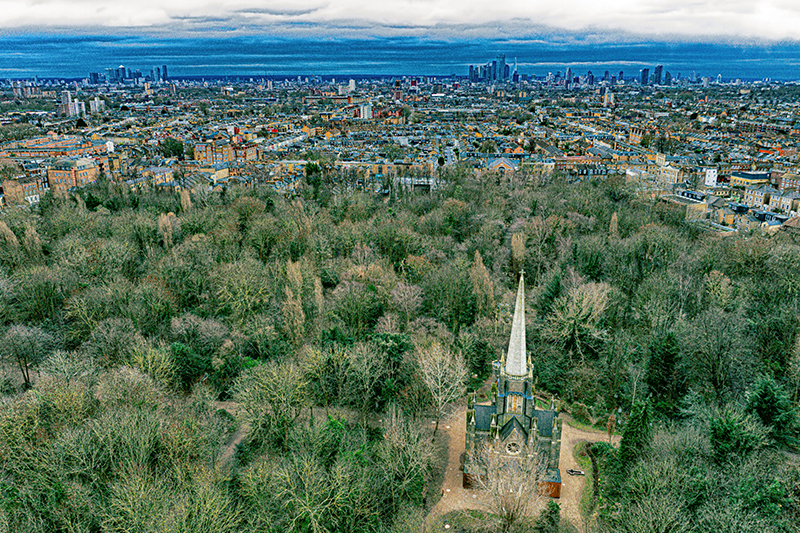
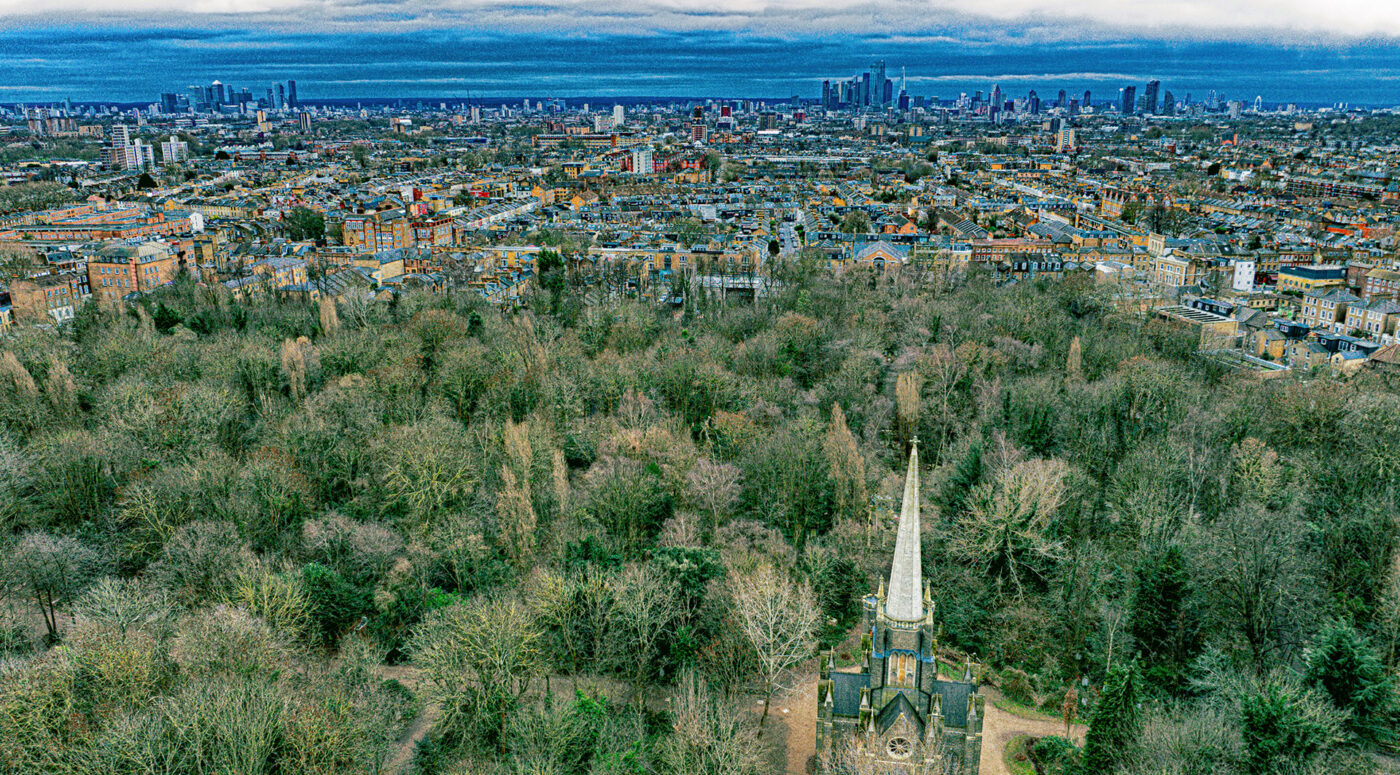
This can be seen in the radical rewilding initiatives gracefully disrupting the architecture, which have led the United Nations to recognize London as the world’s largest urban forest. Native habitants are reclaiming forgotten pockets, and nature is reclaiming its rightful place.
Out of the ruins
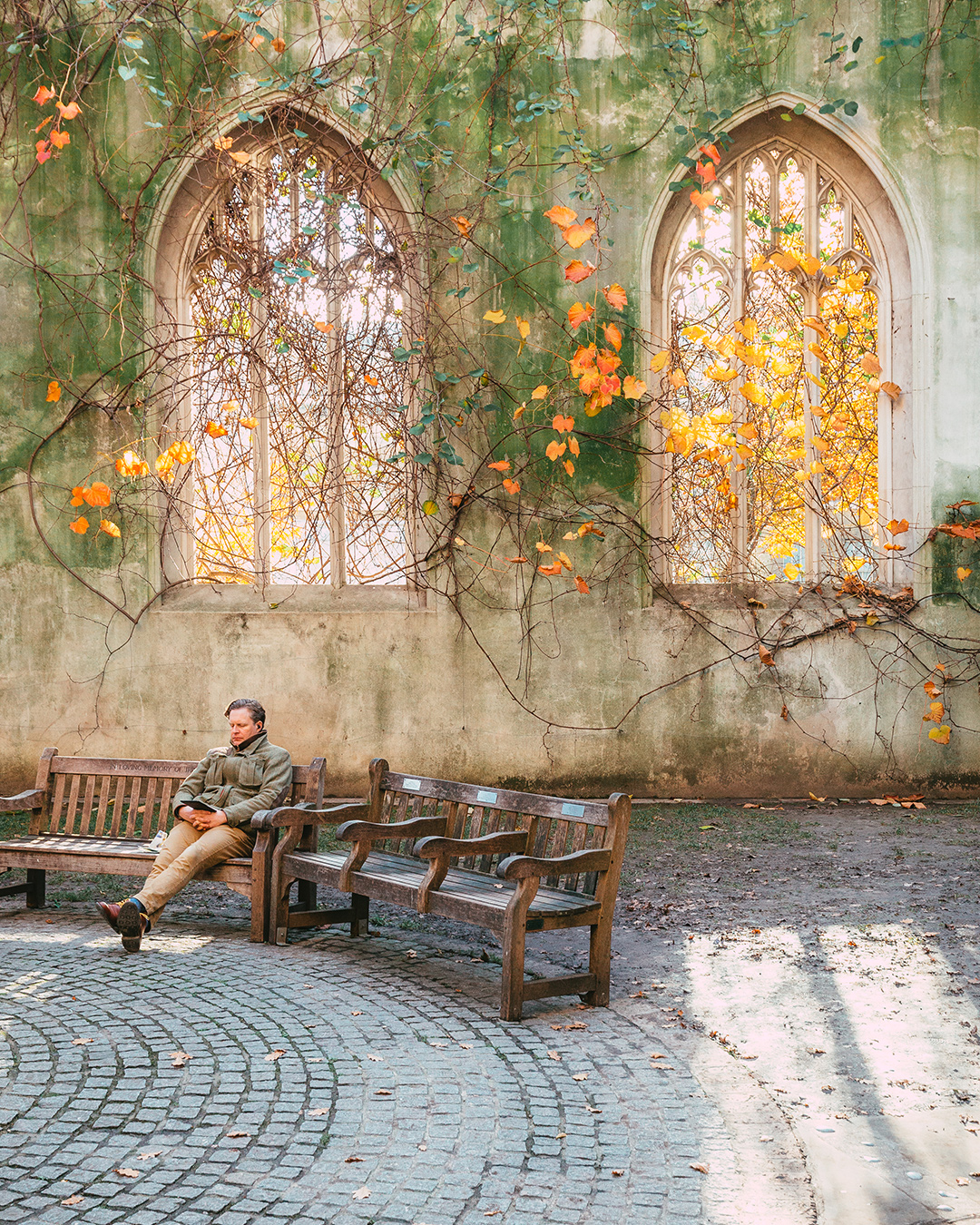
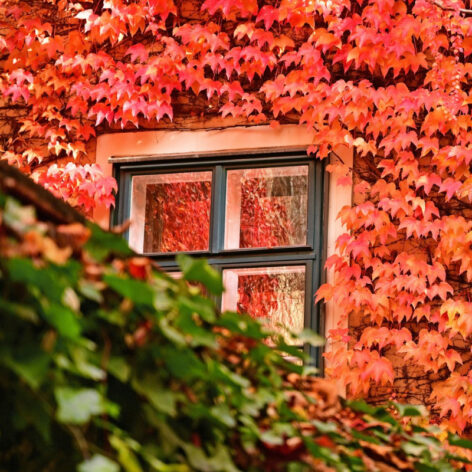
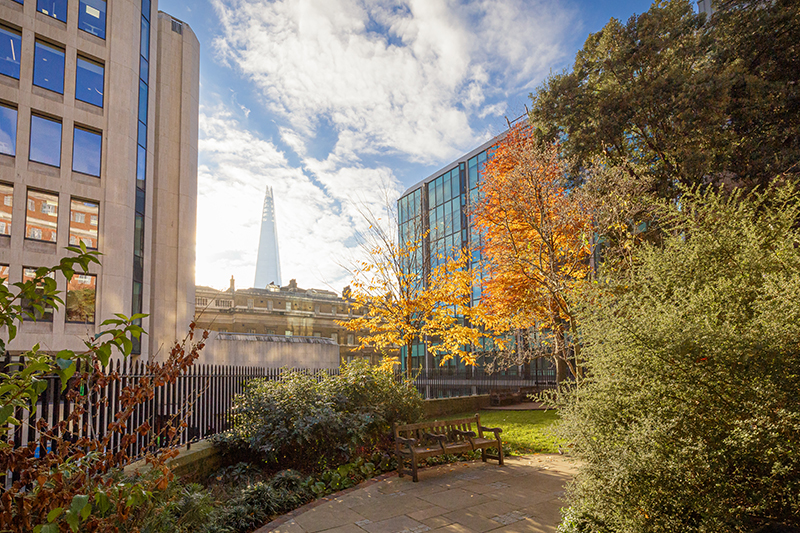
In the City of London – the historic core and financial district of the British capital – global markets dictate its uncompromising, second-by-second pace. But within this epicenter of the corporate world there is a quiet spot where nature has successfully staged a green rebellion: St Dunstan-in-the-East, a church built circa 1100. A Grade I listed building, it is often widely considered the most beautiful church garden in London, despite being severely damaged in 1666 by the Great Fire of London, and again during the Blitz. Instead of being rebuilt, its stone ruins have been surrendered instead to the soft governance of the earth. With the passage of time, it has been magnificently overtaken by climbing ivy, exotic trees, and delicate wallflowers.