• Skip to primary navigation
  • Skip to main content
  • Skip to footer

Sawasdee

Sawasdee
  • Happenings
  • Inspiration
  • Food & Drink
  • บทความภาษาไทย
  • Thai Airways
  • Download e-Magazine
  • Toggle Search

    City Guides

    Bangkok

    วัดป่าดาราภิรมย์ (เครดิตรูปภาพ: iStockphoto)

    Chiang Mai

City Guides

วัดป่าดาราภิรมย์ (เครดิตรูปภาพ: iStockphoto)

Chiang Mai

Bangkok

The Great Passage of Pakistan

Inspiration

Tracing Pakistan’s stretch of the Grand Trunk Road reveals a journey through empires, ancient cities, and cultural exchanges that shaped the subcontinent over millennia.

May 1, 2026

Text: Kunakorn Vanichviroon

7 min read

Facebook LinkedIn Line Viber Pinterest Twitter Email

Few journeys offer such a direct connection to history as the Grand Trunk Road, one of Asia’s oldest and most enduring highways. Stretching across countries and centuries, this legendary route has long served as a corridor for trade, migration, and cultural exchange. In Pakistan, its path unfolds as a living archive — where ancient cities, archaeological treasures, and imperial landmarks sit alongside the rhythms of modern life. Traveling this historic artery is not simply about moving between destinations, but about experiencing the layers of civilizations that have passed through it, leaving behind stories that continue to propel the region today.

To attempt a concise portrait of Pakistan is to accept inevitable inadequacy: this nation of nearly 260 million people boasts a profusion of languages, ethnicities, and cultural traditions that cannot easily be summed up. Yet there exists a singular artery through which the country’s historical and aesthetic complexity may be experienced with rare immediacy – the storied Grand Trunk Road, known locally and affectionately as the GT Road.
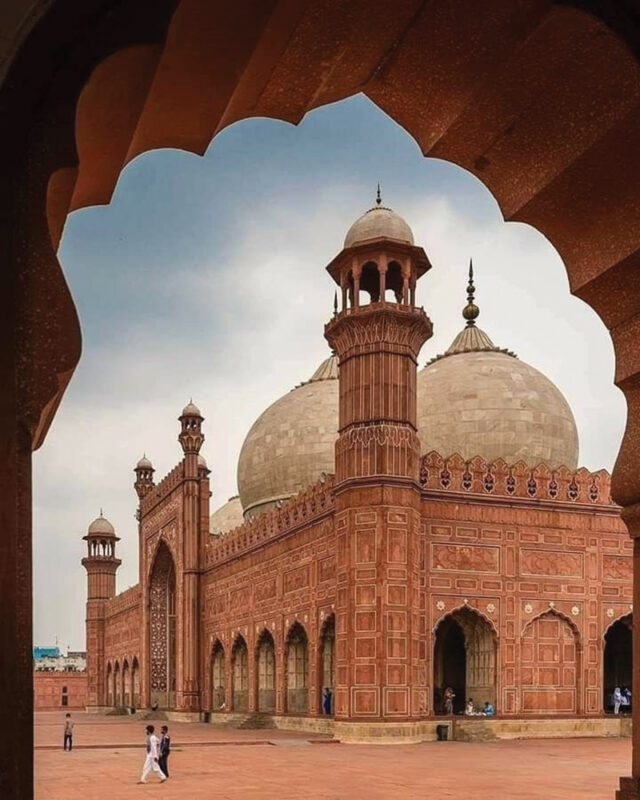
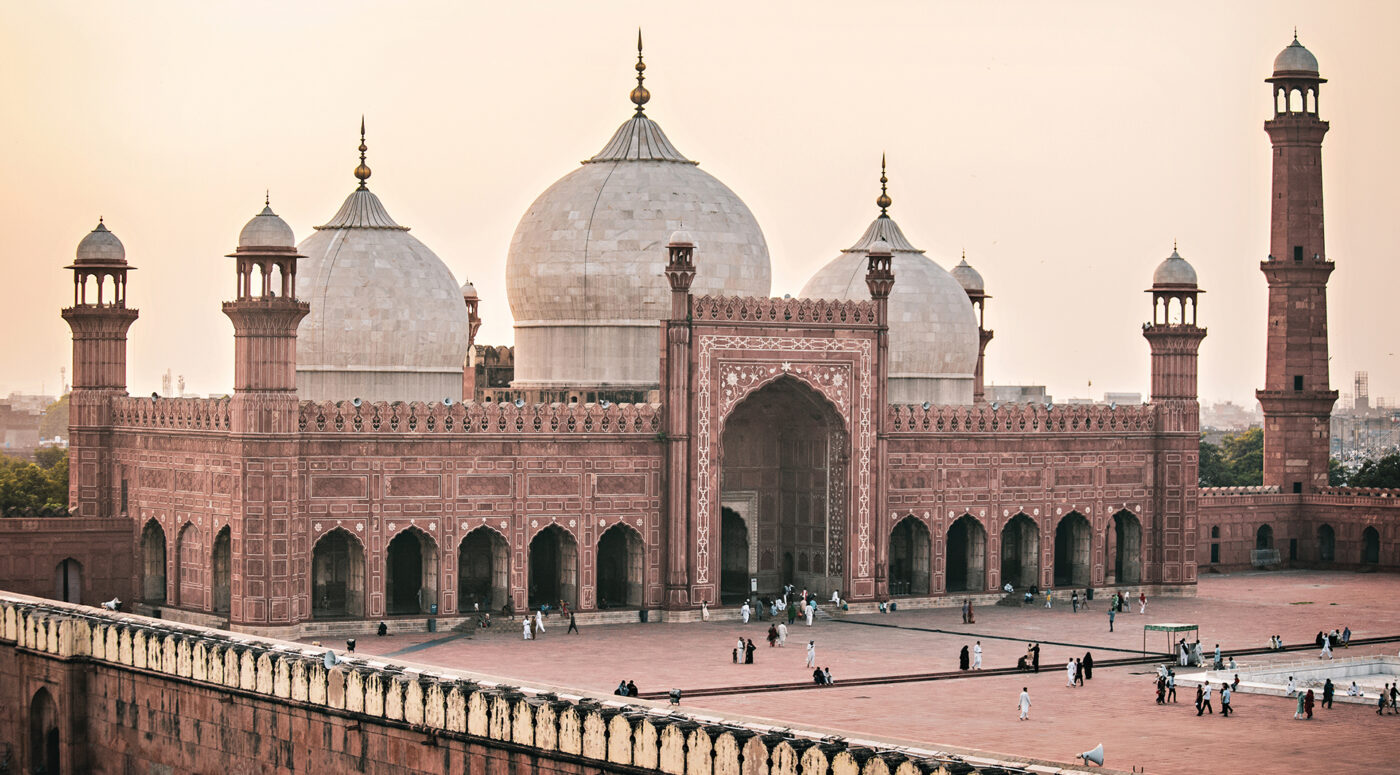
Badshahi Mosque
Badshahi Mosque

The name itself, grandiose and imperial, was bestowed by British colonial administrators scarcely two centuries ago. But the road’s provenance stretches far deeper into antiquity. Long before the rise of the British Empire, before even the lifetime of the Buddha, this overland corridor – then known as the Uttarapatha, or Northern Route – stitched together the great cities of the subcontinent for over three millennia. Extending from Afghanistan through Pakistan and India to the port of Chittagong in present-day Bangladesh, it is widely regarded as one of the world’s oldest and most consequential trade routes – a conduit not merely for commerce, but for ideas, armies, religions, and art.

Our journey traces the approximately 600-kilometer Pakistani stretch of this ancient highway, beginning at Torkham on the Afghan frontier. When political conditions permit, a detour to Michni Fort rewards the intrepid traveler. Set against the austere grandeur of the Hindu Kush, this stern bastion of stone – its thick walls punctured by narrow apertures – appears at first glance like a relic from medieval Europe. In truth, it was constructed in 1913 by the British to monitor movement through the strategically vital Khyber Pass, that storied gateway through which merchants, pilgrims, and conquerors have entered South Asia since days of yore.
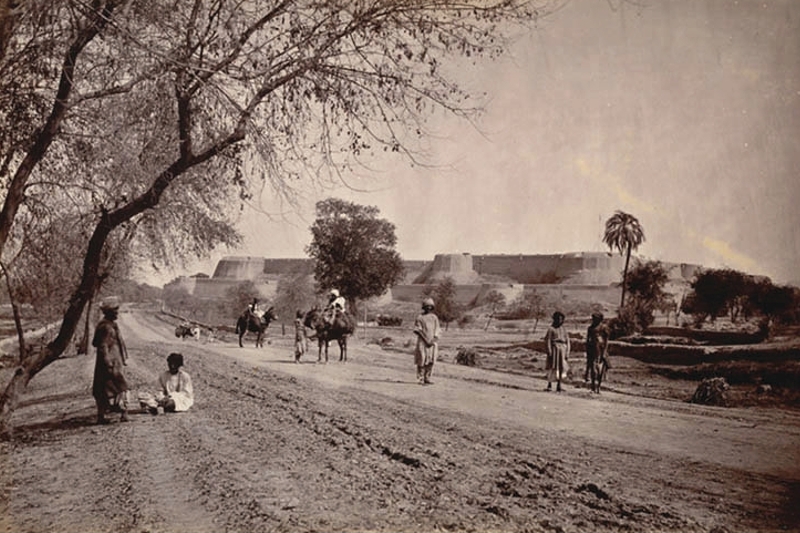
The historic Grand Trunk Road in Peshawar in 1862

It was here, around 2,350 years ago, that Alexander the Great advanced with his formidable army. Legend has it that his tutor, Aristotle, once told him, “If you stood upon the Hindu Kush and gazed eastward, you would glimpse the edge of the world.” What Alexander found instead was a vast and humbling immensity – mountains dissolving into plains, tributaries braiding together to form the mighty Indus – whose very name would give rise to “India.”

From this dramatic frontier, Alexander dispatched his heavily armed main force through the Khyber Pass along the Grand Trunk Road, passing through ancient Purushapura – modern-day Peshawar – while he himself led a contingent northward along the Swat Valley to subdue recalcitrant Himalayan principalities. Among his most celebrated victories was the capture of Aornus (present-day Pir-Sar), a seemingly impregnable stronghold rumored to have withstood even Hercules. Having secured the mountain kingdoms, Alexander rejoined his principal army on the plains. There, hundreds of boats were assembled and lashed into a wooden bridge to ferry some 80,000 soldiers across the Indus before the campaign continued southeast for about 60 kilometers toward the formidable city of Takshasila, or Taxila.
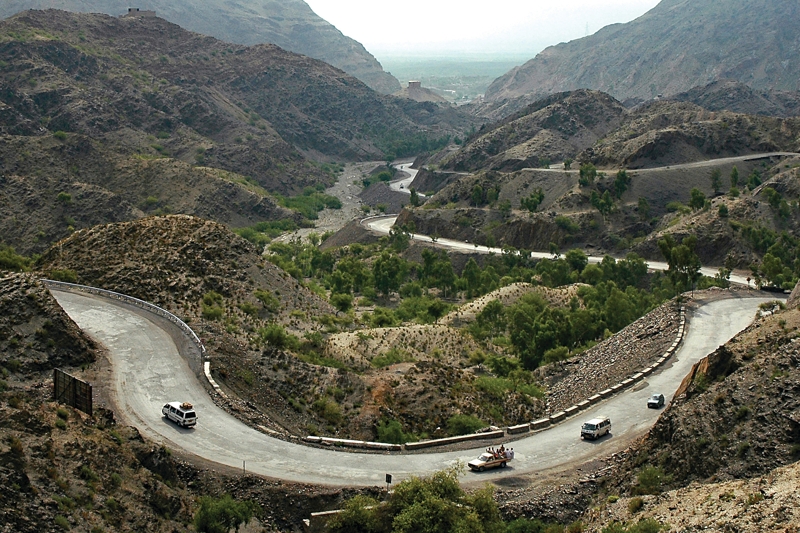
Khyber Pass
Khyber Pass

The ruler of Taxila, apprised of the Macedonian advance, adopted a posture of diplomatic pragmatism. Envoys were dispatched bearing gifts and professions of loyalty, seeking alliance rather than annihilation. Thus, when Alexander’s battle-weary troops arrived, they were met not with resistance but with hospitality – a calculated welcome that altered the region’s cultural trajectory.

Today, Taxila stands among Pakistan’s most extraordinary archaeological landscapes and is recognized as a UNESCO World Heritage Site. Excavations reveal a city rebuilt across centuries, each layer inscribing its own geometry upon the land. The earliest strata, dating back some 2,500 years, comprise a labyrinth of narrow lanes typical of ancient South Asian urbanism. Yet it is the later city of Sirkap – constructed in the aftermath of Alexander’s incursion – that most strikingly testifies to Hellenistic influence. Its orthogonal street grid evokes the rational urban planning of Greek polities. Just beyond lies the Jandial Temple, whose Ionic columns and harmonious proportions unmistakably echo the architectural language of the Mediterranean world.

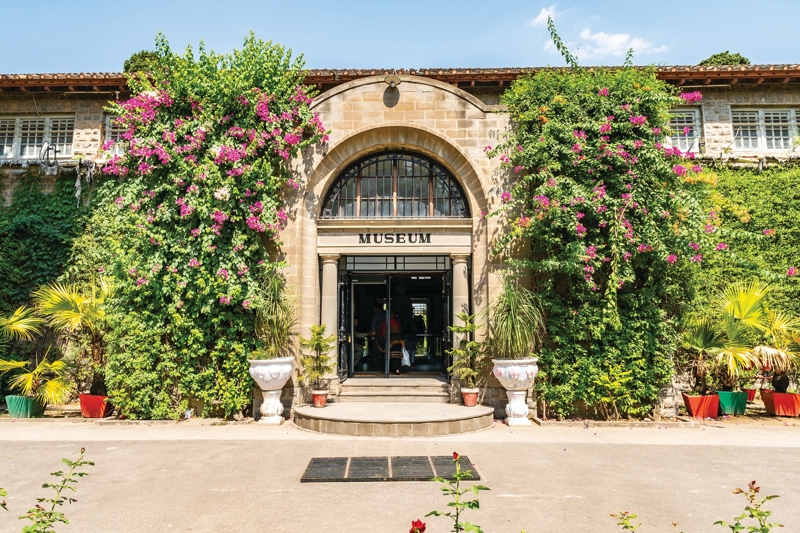
Local lore occasionally whispers of ancestors in this region with golden hair and blue eyes, a romanticized nod to distant Macedonian forebears. Yet the most compelling evidence of cultural convergence resides in the galleries of the Taxila Museum. Here, the legacy of cross-continental encounter assumes tangible form in the refined sculptures of Gandharan art. Carved in schist and stucco, figures bear the serene countenances, naturalistic drapery, and anatomical precision of Hellenistic tradition. It was within this crucible of artistic fusion that the first anthropomorphic images of the Buddha emerged some two millennia ago – an innovation that profoundly reshaped Buddhist devotional practice across Asia.

Thai Airways International A350 aircraft
Taxila Museum
Taxila Museum

To travel the Grand Trunk Road in Pakistan, then, is not merely to traverse distance. It is to move through strata of time – to witness how empire and exchange, diplomacy and conquest, have left their indelible imprint upon landscape and imagination alike.

A mere 30 kilometers east of Taxila, we arrive in Islamabad – Pakistan’s purpose-built capital, conceived in the 1960s, scarcely two decades after independence. It is more poised and deliberate than its older, more kinetic neighbor, Rawalpindi, whose bazaars and barracks once anchored the region’s commercial and military life.

From here, the storied Grand Trunk Road – designated today as National Highway 5 – unfurls southeastward for more than 300 kilometers. It crosses the Jhelum River, where Alexander the Great is said to have faced the formidable war elephants of Porus, before slicing through the alluvial vastness of Punjab toward Lahore.

This highway is no mere roadway but a civilizational spine – an economic lifeline as indispensable today as it was in antiquity. About 2,300 years ago, the Greek envoy Megasthenes journeyed east to forge diplomatic ties with the Mauryan Empire. In his accounts, he described a grand arterial route linking frontier cities such as Taxila and Peshawar to the imperial capital of Pataliputra (modern-day Patna). He attributed its restoration to “Chandragupta Maurya, the far-sighted founder of the dynasty, who improved the ancient Uttarapatha into a conduit of imperial cohesion.”

Centuries later, in the 16th century, the Afghan ruler Sher Shah Suri undertook a sweeping reconstruction of this venerable route during his brief yet transformative reign over the Sur Empire. Though he ruled for only five years, his infrastructural vision was enduring. He commissioned the construction of Kos Minars – slender milestone towers punctuating the horizon – alongside stepwells (a form of well) and inns where travelers were reputedly offered food and water without charge. It was a network designed not merely for commerce, but for hospitality and imperial stewardship.

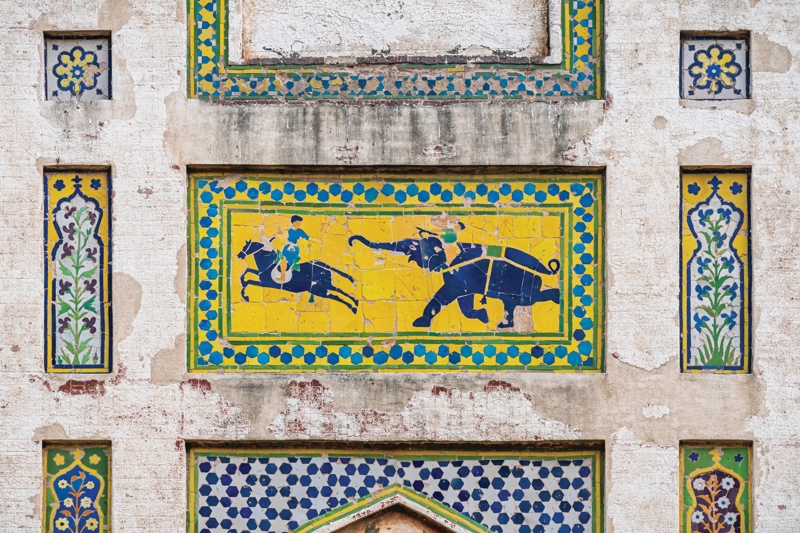
Kashi-kari mosaic detail on Lahore Fort's historic Picture Wall
Kashi-kari mosaic detail on Lahore Fort’s historic Picture Wall

The succeeding Mughal emperors expanded upon this legacy. They planted avenues of trees to temper the subcontinental sun and provide refuge from monsoon rains. Under Jahangir, inns – or caravanserais, as they are known – were reinforced with stone and fired brick, and bridges spanned treacherous crossings. By the 17th century, the thoroughfare had acquired a regal epithet called the Badshahi Sadak, or King’s Road.

Near the point where the Grand Trunk Road approaches the banks of the Ravi River – known to the Greeks as the Hydraotes, a principal tributary of the Indus – spreads a vast garden in the Persian charbagh style. Here stands the mausoleum of Emperor Jahangir, its four soaring minarets framing a serene geometrical landscape of lawns and water channels. Within, beneath delicately carved stone niches, lies the emperor who died in 1627, his life shadowed by opium’s quiet tyranny.

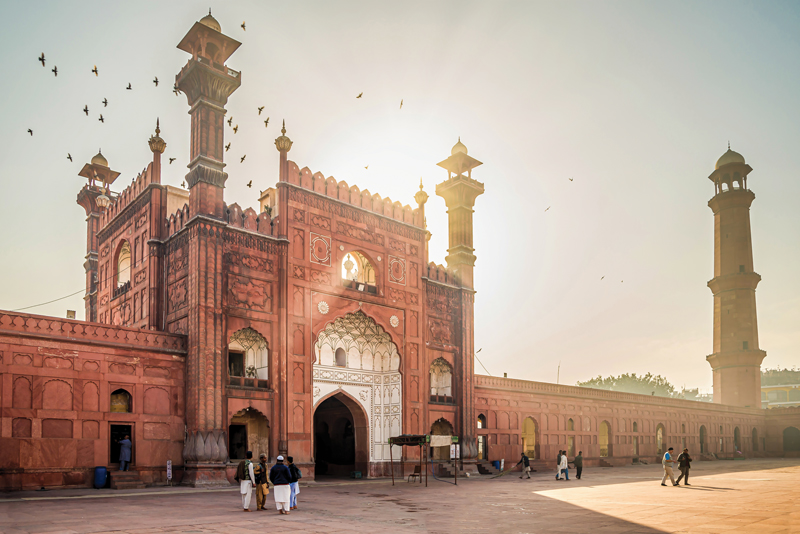
Across the Ravi rises the old city of Lahore, still resplendent with Mughal grandeur. The monumental Badshahi Mosque commands immediate reverence, its immense courtyard capable of accommodating up to 100,000 worshippers. Nearby, the formidable Lahore Fort – both imperial residence and seat of judgment – unfolds in a succession of marble pavilions and frescoed halls. Yet beyond these august monuments, Lahore’s mercantile soul endures. In the old trading quarter near Kashmiri Gate, the ritual of bargaining persists with undiminished fervor. The cadence of negotiation, the scent of spices, and the press of humanity evoke an earlier epoch – when merchants once trundled along this very artery in ox- and horse-drawn carts, bearing silk, indigo, and stories from distant courts.

Badshahi Mosque
Badshahi Mosque

Departing the old city through Delhi Gate, one rejoins the Grand Trunk Road as it stretches eastward toward the frontier. The border with India lies a mere 30 kilometers ahead.

To travel the GT Road today is to traverse not simply geography but strata of history. Empires have risen and receded along its margins – cities have flourished, faltered, and flourished anew. The road remains what it has always been: a conduit of ambition, exchange, and encounter. In its dust and dynamism, one discerns the layered, beguiling complexity of Pakistan – a nation whose past is not a distant relic, but a living invitation to curious travelers.

Let Royal Orchid Holidays transport you back in time to experience the grandeur of Pakistan. Take on a journey to rediscover the legendary routes and beyond at www.royalorchidholidays.com

Tracing Pakistan’s historic crossroads of civilizations. Fly to Pakistan with Thai Airways.

Latest Stories

Mount Bromo, Indonesia (Photography by Rangsiman Sudhibutr)

Inspiration

The Curated Moments

Food & Drink

7 Must-Visit Spots Around Hua Lamphong for Cafés, Art & Culture

Inspiration

Kuala Lumpur: The Reinvented Rhythm

Footer

About Us

  • Our website
  • Advertise with us
  • User agreement
  • Privacy policy
  • Cookie policy
Thai Airways

Social

  • Instagram

COPYRIGHT © 2026 Thai Airways International Public Company Limited (THAI). All rights reserved.

A Star Alliance Member
Sawasdee
  • Happenings
  • Inspiration
  • Food & Drink
  • บทความภาษาไทย
  • Thai Airways
  • Download e-Magazine
  • Toggle Search

    City Guides

    วัดป่าดาราภิรมย์ (เครดิตรูปภาพ: iStockphoto)

    Chiang Mai

    Bangkok

City Guides

วัดป่าดาราภิรมย์ (เครดิตรูปภาพ: iStockphoto)

Chiang Mai

Bangkok

BOOK FLIGHTS NOW